Friday, 8 April 2011

G: Guilt - Workplace Bullying

Guilt:

  1. the state of having done a wrong or committed an offense; culpability, legal or ethical
  2. a painful feeling of self-reproach resulting from a belief that one has done something wrong or immoral (yourdictionary)

Bullying and guilt are often intertwined:
The target might be encouraged to feel guilty if they take action against the perpetrator because it is seen as harming the department by bringing disrepute upon it. Disciplinary action may even be threatened. the underlying message is "How dare you let anyone know things aren't perfect here".

The target may feel guilty for taking time off work, particularly if you work with children, patients, the community or for the ambulance service, fire brigade, police force etc. After all these people need you!

Alternatively you may have been advised by your health care professionals to take stress leave, and feel it is justified, but the bully makes slurs about this decision and questions your motives, commitment and mental health.  The bully implies to others that you're weak because you need time off. Bullies are deceptive, amoral and abuse their power which makes it extremely difficult to stand up to them.  They are clever, manipulative and controlling.

Adults often state they feel guilty for being weak in being unable to stand up to the bully. After all, we left that behind at school didn't we, we're strong adults? We don't expect to find the schoolyard bully has graduated into a workplace monster, sneakier, more malicious and with many years of bullying expertise under their belt.

Very complex, very mucky. Seek help if you believe you are being subject to workplace bullying.
You feel guilty for taking time off to do something therapeutic and wholesome.
Here tomorrow: Harassment & Health


How to make a hyperlink signature here.


There are many outstanding resources on line. A couple I find useful are Bullying. No way! an Australian resource for teachers and students, and a UK site Bully On Line. This is in no way an exhaustive list, and each country will no doubt have equally good or more relevant websites.

Over at jumpingaground I'm spending the month Drabbling using alliteration, with an environmental theme.
.

Thursday, 7 April 2011

F: Friends - Bullying

Friends can help you navigate the stormy seas.
With permission from the artist: Terry Denton.
Never underestimate the power of friendships when you are experiencing any form of bullying. Whilst it may be very difficult if you are the target to explain what is happening, please make the effort!

Friends; listen kindly and patiently. The target may feel confused, foolish, apologetic, silly, embarrassed or any number of emotions and stumble to express the experience. Hopefully you can reassure that the experiencing is bullying behaviour and provide support through any formal procedures. If you're unsure, check out the links at the bottom of the post or seek professional advice from a practitioner experienced in this area.

Supportive measures can be as simple as phone call, having a cup of tea or going for a walk, but exercising together is even better!
Exercise is a great way to help deal with the effects of stress.


With one person, I sent a text message each day, starting with the letter A and going through to Z, describing how I felt about the bully. (A bit like this A-Z blogging challenge) I was told later that this was something the person looked forward to as it was a bit of lighthearted relief from the torment.
For parents, make the time to listen - just listen, don't take over. Prompt if necessary, but let the tears and anger, hurt and confusion come. Reassure the child that they have NOT done anything to bring the bullying upon themselves. It's important that they understand they're not being weak, they are trying to cope with a sneaky undermining individual who is in fact envious of your child's fine qualities.
Hanging out together is great.
Here tomorrow: Guilt


There are many outstanding resources on line. A couple I find useful are Bullying. No way! an Australian resource for teachers and students, and a UK site Bully On Line. This is in no way an exhaustive list, and each country will no doubt have equally good or more relevant websites. If you're being bullied please seek advice from a professional health care practitioner experienced in this area.

Over at jumpingaground I'm spending the month Drabbling using alliteration, mostly with an environmental theme.
.

Wednesday, 6 April 2011

E: Ethical Behaviour - Bullying

Ethics is a very difficult word to define adequately. In general it's related to issues about morality including concepts such as good and evil, right and wrong, virtue and vice. (Wikipedia)

Endemic bullying is NOT ethical, and places which tolerate it could violating the need to provide a safe working environment and may be in breach of their Occupational Health and Safety obligations.

It has been estimated that up to 1/3 of secondary school students have experienced bullying. This often results in increased absenteeism, fear, the inability to learn and generally poor academic results. A teacher may notice grades dropping off unexpectedly and the child may become withdrawn and unwilling to participate.

When any person, child OR adult is in a bullying environment, they will be unable to perform to the best of their ability; their whole being is focused on survival from the torment. They may be fearful of violence, and equally afraid to defend themselves. The flight or fight response is on high alert waiting to kick in as needed and they will be exhausted from maintaining this hyper-vigilance.

The bully is most often a serial offender, it is rarely a one off experience for either them or their targets. The violence or abuse they mete out may not be overtly physical (although this can happen) but may be the sly punches, kicks or pinches as the target tries to walk past in a crowded corridor.

A child may be afraid of the boot.
An adult may be afraid of being booted out of
 the workplace if they complain
The bully in a child's life can unfortunately also be an adult, and some teachers have been known to get pleasure from the power they have over children. Rather than use of the strap which is now outlawed (in Australia at least) they may nit pic, use derogatory comments (particularly if the child has a learning difficulty or is different), keep the child in after class, mark work down or criticise constantly. This IS bullying and will not toughen the child up or encourage them to learn their spelling or times tables.


See yesterday's image of the brain, and read the layman's description of how the brain responds under constant stress and criticism.

Whether at school or work any of the above behaviours are unethical.

Here tomorrow: Friends


There are many outstanding resources on line. A couple I find useful are Bullying. No way! an Australian resource for teachers and students, and a UK site Bully On Line. This is in no way an exhaustive list, and each country will no doubt have equally good or more relevant websites. If you're being bullied please seek advice from a professional health care practitioner experienced in this area.

Over at jumpingaground I'm spending the month Drabbling using alliteration, mostly with a climate related theme.

.

Tuesday, 5 April 2011

D. Danger, Depression & Doctors. Bullying

Don't underestimate the danger of bullying to your long term health. The bully has been enjoying this way of life for many years and is masterful at avoiding responsibility for his/her actions. You on the other hand may have dealt with normal (relatively!) people. You may naively fall into the trap of wondering if you did something wrong or is you were responsible is some way.
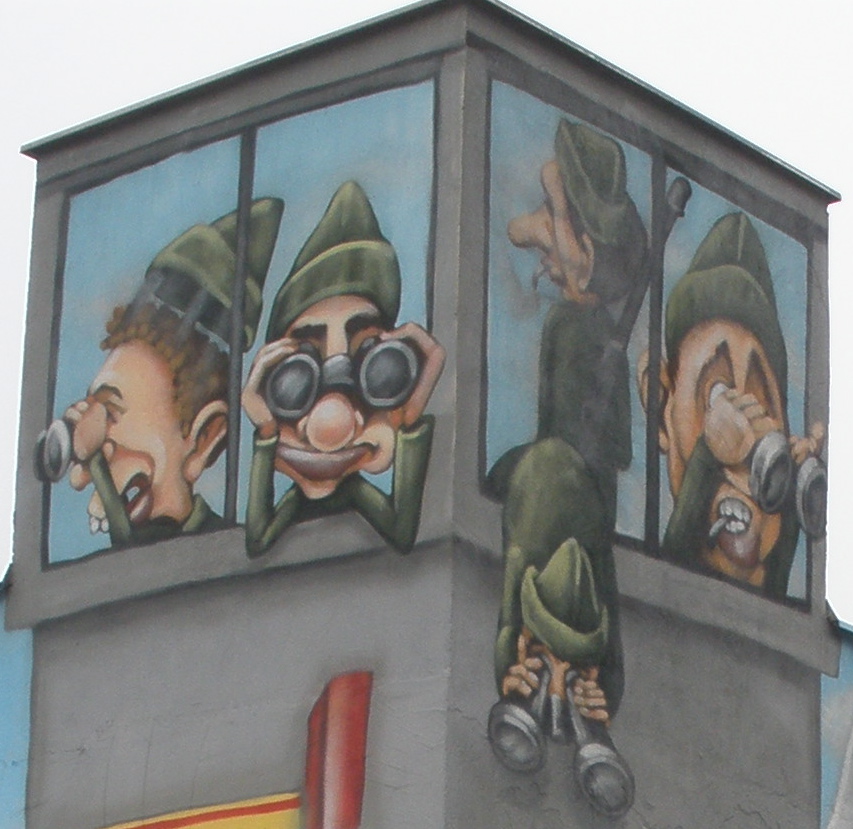
You might become hyper-vigilant
(Photo: Eastside Gallery Berlin 2009).
Unfortunately due to the extreme stress you may be experiencing, it is very possible to have some dysfunctional thoughts, and begin to almost believe you are responsible for the events. This sounds odd unless you've been through this with someone know very well and trust. The bully is able to manipulate and undermine your confidence in yourself.

In my layman's terms, your brain suffers a kind of paralysis and goes into protective mode, bits begin to shut down as you stress more and more. (This is in no way a medical explanation. For the science behind it you will need to get information from a neuroscientist or other professional experienced in the area).

Depression is very common amongst those who have been bullied, and whilst it is situational or reactive (caused directly by events in your workplace, place of worship, home, sporting-club or school) the long term effects can also be dreadful, with panic attacks and susceptibility to ill-health including disrupted sleep for many years after the event.

You may not be sleeping well, and may also react by eating poorly and exercising less, this can become a vicious cycle which is difficult to break and which doesn't help the situation at all.

Doctors are also vulnerable to bullying from others in the profession who enjoy dominance, power and the feeling that they are always right. Junior doctors in particular may be disempowered, being required to work unhealthily long shifts which puts both them and their patients in danger. See here for further information.


Whilst it may seem a bit flippant given the topic, I love this picture of a healthy brain showing right and left hemispheres.  In my vision of a suffering brain, the sides don't connect properly, the right hemisphere is clouded by dark, gloomy and threatening storms with lightning strikes, floods, general mayhem and has been damaged by the constant attacks. The left side has become wizened, rigid and brittle.


(I would like to attribute this brilliant diagram to the correct owner, but unfortunately I don't know where it came from. If anyone knows could you please tell me.)

***

Here tomorrow: Evidence & Ethical behaviour


There are many outstanding resources on line. A couple I find useful are Bullying. No way! an Australian resource for teachers and students, and a UK site Bully On Line. This is in no way an exhaustive list, and each country will no doubt have equally good or more relevant websites. If you're being bullied please seek advice from a professional health care practitioner experienced in this area.


Over at jumpingaground I'm spending the month Drabbling using alliteration, mostly with a climate related theme.
.

Monday, 4 April 2011

C. Courage & Climate. A-Z challenge

Courage: the ability to do something that frightens you, even in the face of danger, threat or grief.

Last July I wrote a tribute - available here - to the strong women and men I've known who have shown immense courage in standing up to, and speaking out about bullies and sexual predators. In most cases it has taken a dreadful toll on their health. They've questioned their wisdom and had their sanity queried, but have stood firm in the knowledge that if they didn't take a stand the cruelty would continue if not for them then for others. In all cases the person I have supported has been one in a long line of 'victims' or targets.

None of these people has at the outset expected the road to have been so difficult or for 'justice' (of doubtful value) to take so long to be achieved.  Some adults who have endured years of bullying as a child struggle to find the confidence to acknowledge their worth. One story is available here.

I've also supported people who for various reasons have been unable to expose the bullying. Their suffering has been heart-wrenching but they are no less courageous, and have lived through dreadful torment.

Climate: In some workplaces there can be a climate of fear or mistrust, possibly only in the specific department, but sometimes throughout the entire workplace. The perpetrator may criticise and fault find constantly; this is combined with a complete absence of praise. The bully will tend to undermine the target's credibility and often will have an unhealthy need for complete control, possibly micro managing, whilst simultaneously undermining the target by withholding vital information such as computer passwords, meeting schedules etc. A female bully may need to be 'the Queen Bee' and have her chosen minions hover around and be at her beck and call.

The bully may have charisma and cultivate friendships with certain colleagues, but leave others sidelined. The target or targets may have a sense that something is not quite right, but are unable initially to put their finger on the niggling feelings as superficially everything appears to be pleasant. Pay attention to the small voice.  Stop and listen! Your sixth sense is there for a very good reason.

A threatening storm.

Tomorrow: Danger, Depression & Doctors


***
There are many outstanding resources on line. A couple I find useful are Bullying. No way! an Australian resource for teachers and students, and a UK site Bully On Line. This is in no way an exhaustive list, and each country will no doubt have equally good or more relevant websites. If you're being bullied please seek advice from a professional health care practitioner experienced in this area.


Over at jumpingaground I'm spending the month Drabbling using alliteration, mostly with a climate related theme.
.

Saturday, 2 April 2011

B is for Bullying. A - Z Blogging Challenge

How to recognize Bullying behaviour at work. 


Many of these examples can be a part of everyday work life.  They can be described as bullying when there is a consistent, sustained pattern over time that isn't altered when the bully is alerted to the unacceptable nature of the comment or behaviour.
  • Abusive, insulting or offensive language
  • Behaviour or language that frightens, humiliates, belittles or degrades, including yelled criticism
  • Belittling your contributions 
  • Constant nit-picking and faultfinding, attempts to undermine
  • Displaying material that is degrading or offending
  • Distorting your comments
  • Deadlines changed without informing you
  • Degrading comments
  • Enlisting others to question and undermine your contributions, being Excluded
  • Falsifying documents purported to be from you, constant Fault finding
  • Going to a supervisor to cast doubts on your work
  • Hiring another less qualified person to squeeze you out
  • Information may be passed on too late for action
  • Ignoring and Isolating
  • Intruding on a person’s space by pestering, spying or tampering with their personal effects or work equipment
  • Jokes at your expense that aren't funny
  • Leave is often refused
  • Making threats either veiled or subtly, being given Menial tasks
  • Misrepresentation of your ideas or contributions, being marginalized
  • Never being adequately supported
  • Overloading with work, may be given menial tasks, or constant night and weekend shifts
  • your work may be Plagiarised
  • Pestering
  • Questioning your motives, work habits, reliability, emotional state
  • Refusal to acknowledge your contribution
  • Responsibilities may be increased without adequate remuneration or recognition
  • Spreading gossip, rumours and innuendo of a malicious nature
  • Being Singled out and treated differently
  • Teasing or regularly making you the brunt of practical jokes
  • Threats that if you complain, disciplinary action will be taken
  • Trivializing your contributions
  • Tampering with your personal effects
  • Undermining your position, status, worth and value. Unjustified criticism
  • Unreasonable expectations
  • Unfair treatment in relation to accessing workplace entitlements, such as leave or training
  • using Value laden comments to discredit you
  • Work equipment may be hidden, locked away. You may need to grovel to gain access to it
  • Yelling, in private, or in front of others
How to recognise bullying behaviour at school:
  • may be academically below average
  • aggressive, physically strong, willing to resort to violence
  • attention-seeking 
  • thrives on control and dominance 
  • cowardly
  • poor communication skills 
  • disrespectful and contemptuous of other children and adults
  • divisive, dysfunctional, disruptive
  • may have a dysfunctional home life
  • lacks empathy
  • envious
  • exploits others
  • needs to impress
  • immature in behaviour and emotions
  • insecure
  • lies frequently
  • needs to be respected but can't distinguish between "respect" and "fear"
  • does not accept responsibility
  • poor social skills
  • low self-esteem
  • thinks it fun to torment and hurt children who are less physically strong 
  • uncaring
Tomorrow, I'll look at the Climate in which the bully operates and touch on the Courage needed to stand up to a bully.

The book Working with Mean Girls by Meredith fuller is an excellent resource for both men and women experiencing bullying at work. There are also useful tips for students. Review here.

There are many outstanding resources on line. A couple I find useful are Bullying. No way! an Australian resource for teachers and students, and a UK site Bully On Line. The Facebook group eBossWatch (here) regularly posts links to articles and information on workplace bullying. This is in no way an exhaustive list, and each country will no doubt have equally good or more relevant websites.


If you're being bullied please seek advice from a professional health care practitioner experienced in this area.


Over at jumping aground I'm spending the month playing with alliteration.
.

Friday, 1 April 2011

A. The Angst & anguish of workplace bullying. A-Z blogging challenge.

Anguish:
"A great mental suffering or pain". An appropriate A word that sums up the experience of being bullied, whether at home, school, work, your place of worship, your club - indeed, wherever it happens.

To begin, I'll look at what bullying behaviour isn't.
Bullying isn't a one off reaming by your boss which is "out of character". Nor is it when a person is experiencing extreme distress such as illness at home, financial difficulties or other life challenges and lashes out with "that was the last straw" moment and spits out mean or hurtful comments.

Things such as these are a normal part of the human experience. We all get frustrated, we all experience hurt, we all get snappy and angry, some live with constant pain and may crack occasionally. Most of us learn to apologise after making unfair or cruel comments; we shake hands and move on. We may even feel contrite or embarrassed by our outburst, because it was so out of character. The person on the receiving end may be hurt and upset by the outburst, but there is not much danger of long term damage to one's psyche from a one off, or occasional grumpy comment.

The above is not bullying behaviour.

In brief (and the remainder of the month will look at different aspects of this) bullying behaviour is ongoing, malicious and relentless. This is the big difference. The bully has no desire to change, and often no insight that their serial bullying is inappropriate.  Some are unaware and uncaring, others proud of being tough and 'telling it like it is'.  In the first examples we survive, we're basically OK, but possibly ruffled. The second can lead to ongoing health issues, affect the ability to learn and retain information and have serious life long outcomes.
East Side Gallery. Berlin. 2009.
Being the target of a serial bully can lead to a lifetime of angst and anguish. More on this later in the month.  Below is an explanation of how this series of posts came about.


Angst:
"A feeling of anxiety and worry" - this pretty much sums up how I'm feeling about attempting the A-Z Blogging Challenge this month hosted by Arlee Bird over at Tossing it Out. It's easier (although I might regret saying that) with my other blog jumping aground where I enjoy having fun with words. Here however, I tend to be more serious, and I want to focus on an issue that affects many people.  I've written a couple of posts previously on bullying, discussing the fallout from the prolonged abuse and the immense courage it takes to be a whistleblower.  I now want to revisit the issue and explore it further using the A-Z format focusing on Workplace bullying.  The goal is to blog every day except Sundays, starting with A on April 1st through to Z on April 30th. And when I get stuck?  More angst!

Thankyou to Arlee Bird at 'Tossing It Out' and his artful crew for hosting this amazing challenge.

Here tomorrow B: a closer look at what constitutes Bullying behaviour.
.