Showing posts with label questions. Show all posts

Friday, 14 August 2015

Part Q. Teaching in China. Questions.

The one question I've been most often asked on my return from teaching teachers in China is, "Would you do it again?"

I've often wished it was, "Did your students gain confidence in their spoken English?" That would be easy to answer with a confident - "Yes, all of them!"

But "Would you do it again?" is harder to answer. Partly, it's related to my undeniably Western upbringing and how my body copes with the change of food - it doesn't adapt quickly to the quantity of oil used in Chinese cooking. I'm constantly on the verge of diarrhoea and have a complaining gut. I have trouble sleeping, and find the sweltering heat and extreme humidity draining. Others suffer with painful heat rash. The lack of easy contact with home is challenging. "Yes ... maybe" is met with "So you didn't enjoy the experience", which simply isn't true. Questions aren't always easy to answer.
....

Once you've gained the confidence of adult students, and respect and trust has been fostered, questions beyond your expectations may surface.

Stereotypes absorbed from films make for interesting discussions: Is everyone really that wealthy? Do you all have large homes? We might rarely stop to think about the skewed version of the "typical" western family life, particularly as depicted in TV shows and movies glorifying "the American Dream". We know it's a facade, and the reality for the bulk of US citizens and the western world in general, is very different. Westerners aren't a homogenous group and while students might implicitly understand this, it's important to also note differences within and between cultures. We don't all live in huge beautifully furnished homes. Not everyone is wealthy, many people are afraid of overseas travel particularly to a communist country where the main language isn't English.

My Chinese students were stunned to hear that, before I left home, I'd heard comments like: "Be careful, you never know if you'll be safe overseas, especially in China."
"What do you mean you don't know the name of the town and hotel you'll be staying in before you arrive, isn't that dangerous?" "How will your family know where you are?"
"Isn't China a scary place?"

My Chinese teacher-students looked at me with wide eyed disbelief, then looked at each other with genuine shock tinged with hurt. How could anyone think they, as individuals, could present a danger to anyone! "We thought all Westerners would be comfortable travelling to China." "We're just the same as you except we speak a different language."

And one thing leads to another. More questions emerge, and as trust builds, so does the confidence to ask them.

One day, I had the sense that something was going on between a group of the women. There was a general shuffling of feet, and pointed looking at each other.

"Do you want to ask me a question?"

Nod, nod, nod.

Okay, why aren't they asking? Why do they look so embarrassed? They haven't been backwards in coming forward the past few days.

"Is it something you'd prefer the men not to be here for?"

Nod, nod, nod.

Oh my goodness. What on earth could it be? What to do? How do I handle this? Nothing like this was mentioned in the pre training sessions! I checked with our interpreter and she encouraged me to let the women ask whatever it was they wanted, so I asked them to write the questions down with the understanding that I'd do my best to answer as well as possible.

And what followed probably only came about due to my age, and reinforced that we're all in this together. We all face similar problems and often feel the need to share and know we're not alone:

  • How do I get on with my in-laws?
  • How do I teach manners to children?
  • How do I broach the topic of sex education with my child?
  • How early do I begin the discussion?
  • But they also were curious about our attitudes to abortion and single parenthood, about contraception, menopause, age and retirement.

At other times they asked questions specifically related to teaching:

  • How do you inspire students?
  • How do you help the student who is struggling - with school work, or with problems at home?
  • How do you make your classroom interesting when there are tight time frames in which to deliver necessary material?
  • How do you be a great role model?

And like so much in life, there's no single easy answer. Life is complex, answers will be different, depending on your country of origin, your age, experience and personal background.

More than anything I encouraged them to keep sharing between themselves, to find mutually supportive networks and to use this sharing experience as a great start.

As for "Would you go again?" I returned to Jiangsu in 2015 (to the city of Gaoyou) and found the experience just as rewarding the second time!

My previous posts about Teaching in China were our ArrivalBanquets,  Culture and Comfort foods, DrivingExerciseFabulous Food,GamesHistoryIllnessFrom Jerilderie to JiangsuKenny (which is about toiletsLists and Communication MisunderstandingsNon-verbal communication followed by The Observations of an Onlooker, Pets, Questions and the next will be .... Rest Rooms ...!


.

Tuesday, 4 February 2014

On politics, ethics, integrity and lying.

I


From The Guardian

"It is hard to imagine how he thinks – having made such a point of the importance of keeping election promises, right down to the footnotes – that he will not be judged by precisely the same authenticity standard he used so implacably against his political opponents. 
If you promised to match school funding dollar for dollar over the next four years – if you promised that every single school in Australia gets the same deal whether there is a Labor government or a Coalition government after 7 September – then that's what you promised. 
You cannot subsequently put it down to some well-meaning person's hallucination, a mass delusion, as Abbott suggested on the Bolt Report on Sunday. "But Andrew, we are going to keep our promise. We are going to keep the promise that we actually made, not the promise that some people thought that we made or the promise that some people might have liked us to make. We're going to keep the promise that we actually made."
Katharine Murphy goes on to talk about the political campaign fudge - it's expected, it what happens in elections.
...
To fudge information is to avoid making something clear. Many of us do it with an (almost) clear conscience in response to questions about the style of clothing a friend may be about to purchase, and similar things which don't have a major impact on anyone else.


The above article uses the word fudge in an interesting way. It softens and almost lightens a very serious issue. After all, to call a Prime Minister a liar is unlikely to be something a responsible journalist would do without due consideration. (I'm thinking here of the photos of a grinning Abbott in front of posters of the then PM Julia Gillard, making a pun on her name - juliar .) 


At what stage does a "fudge" become a lie? At what stage are the standards which are expected of children, and of employees in the workplace - to be honest and to tell the truthapplied to adults in parliament?

If a person applies for a job and lies at interview, is hired and is found out to have lied, or fudges figures or information, the employer will take a dim view of the falsehood, and will most likely fire the person. To lie is considered to be a serious breach of appropriate behaviour, and there are consequences.

A scientist who 'fudges' data, who is shoddy and falsifies results will be named and shamed. We expect their work to be free from bias, for results to be presented accurately and as such their papers are subject to scrutiny from qualified peers. If something is amiss, steps are taken to correct the information

Yet politicians aren't held to the same standards expected elsewhere in society. Given what were learning about addiction and money as well as addiction and power, it is an oversight where we, the public are likely to lose.

In a speech to the UK House of Lords in 1770, the British Prime Minister said: "Unlimited power is apt to corrupt the minds of those who possess it." (here)

Abuse of power has been known since Roman times - Isn't it time to look the implications seriously and to attempt to address the issue before societies are ruined?

Is it acceptable for a politician, running for the highest office in a country, to "fudge" information relating to education? to healthcare? to issues which honesty and clarity would be more beneficial to voters PRIOR to an election?

Do we accept (or even expect) the 'fudging' of ethics, of integrity, of honesty? How can those in power be held accountable if we don't know which statements about policy are true and which are lies, when they're both presented as truths? Are we being taught to assume that everything a politician says is a lie? to expect the opposite of what's stated?

It's an appalling state of affairs when what's being affected is our lives, our liberties, our services. When it's a country which is being governed and voters expect to be lied to, it's vastly different to whether a pair of jeans suits a friend. It's serious and can have dire and unexpected consequences for those who expect a modicum of honesty and decency from their representatives.

How can you make an informed decision if lying is more common than honesty?

The voter then has to contort their thinking to go along the lines of:

If he says this then he probably means that, but then again, it could be something else entirely, depending on what way the wind's blowing and the state of his digestion. "

Trust in relationships is eroded when one partner lies, shifts blame and is shown by words and actions to be self-serving, unreliable and dishonest. And yet, it's what we've learnt to expect from some of those who have some of the most influential jobs in the country ... by word and deed, too many politicians have taught the electorate not to trust them, and I believe we're all diminished as a result.

Our elected representatives would do well to pause often, and reflect deeply on the words of Stanley Melbourne Bruce, Australia's Prime Minister, 1923 - 29. 

"May those who enter this open door 
govern with justice, reason 
and equal favour to all. 
May they do so in humility and without self-interest. 
May they think and act nationally. 
May they speak with the voice of those who sent them here
 - the voice of the people." 
9 May 1927

Old Parliament House, Canberra.


...

Saturday, 3 December 2011

Christmas questions

Are you galloping towards a frenetic bout of over-consumption this Christmas season?

Are your purchases something you've thoughtfully and consciously chosen or are you buying as a habit or  in response to the powerful advertising machine and their clever manipulation?

Is the "stuff" you're being encouraged to purchase worthy of your hard earned wage?

Thursday, 8 September 2011

a question

Can you identify what's involved in walking the extra mile so that you can achieve your current goal?
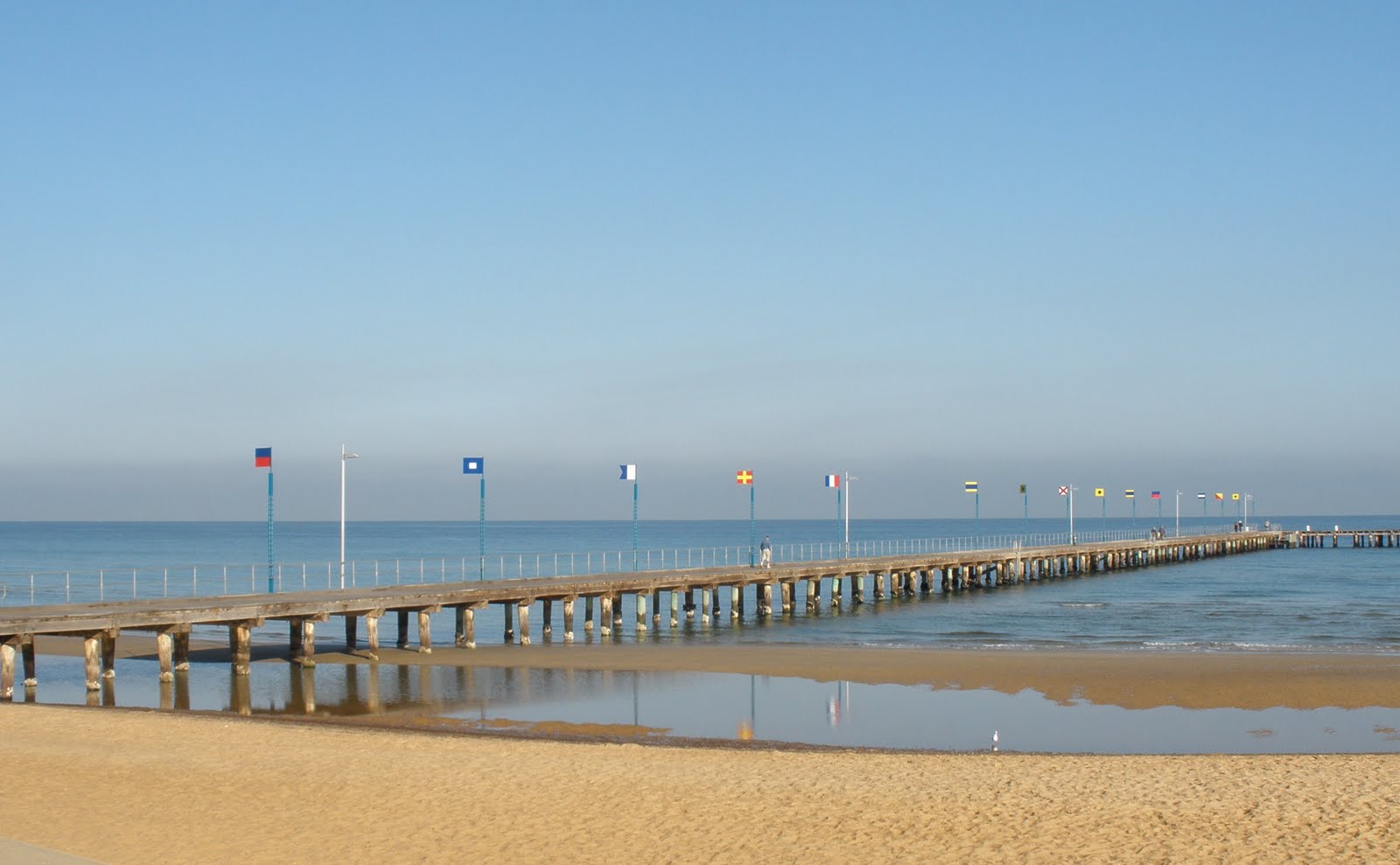
Frankston pier.


.

Friday, 2 September 2011

Illness strikes 'the Report'

Isn’t it frustrating when something goes wrong with Blogger. If you’re like me you fumble around trying to see if it’s something obvious, grumble a LOT, then in desperation head off to the Help Forum to see if others have had the same issue. More often than not, an unknown person, usually operating under a pseudonym, will take up your question and do their best to help us fix the problem.

Sometime last year, I was extremely frustrated by a Blogger issue that I knew would be obvious to someone in the know. So being the sort of person who insists that “the only stupid question is the one you don’t ask” thought I’d better hightail it to the forum for help.

My confusion was sorted with the minimum of fuss.

It’s easy to forget that the help forum is “staffed” by real people who want to share their knowledge and contribute positively to the blogging community. They are unpaid, often unacknowledged, and, I suspect, rarely thanked.

One Blogger Help Forum bloke (who I’ve never met in person) has provided me with a great deal of technical support. the Report is peppered with outstanding Blogger information, good screenshots and explanations - that for the most part I can understand!

Unfortunately, Bob of the Report (and around 30 - yes you read that right, thirty - other blogs) has had an Ischemic stroke, and is pretty much out of action for the moment. I’m sure he’ll be working his guts out to overcome the problems he’s being faced with and will show the same focus on contributing to his own recovery as he’s shown in helping us overcome Bloggers irritating glitches.

Bob is very frustrated, not only by being unable to contribute on the Help Forum or write any posts, but because he can’t communicate as he’d like to. He hasn’t suffered any obvious paralysis, but finds typing excruciatingly slow and difficult. He has trouble interpreting words and his fingers simply won’t hit the keys he wants them to.

I’m sure that anybody who has dipped into Roberto’s Report or been helped by Bob on the Help Forum will agree that Bob has contributed significantly to easing the frustrations we experience with Blogger all too often. His help will be sorely missed, but he assures me he'll be back as soon as possible - "Good onya Bob!"

I just want to thank Bob for all his help. And so, Bob, thanks from me and from all the other people in blogland for sharing your expertise so generously. I'm sure we all wish you a full and speedy recovery.

Get well soon Bob, keep exercising, and look after yourself.


.

Monday, 21 March 2011

Who me? Stylish?!

An award for my blog, wheee! Thanks Helen (Straight from Hel). I'm delighted, and will try not to let it go to my head!

It's a relief it's for my blog, not me, but horrors, does that mean that the pressure's on?

Now, let's see .... Oh dear there are rules, I'm not so good with them usually, but we'll see how I go this time.


Hmm: List 7 things about yourself and pass the award on to 7 others. Seems simple enough (now I've worked out how to copy and paste the award!)


*finds pencil, starts chewing it, wanders around the house procrastinating, gets in the washing from the line before the night air begins to settle, has a cup mug of tea, folds washing, pours a beer, thinks about dinner, pours another beer, gets dinner, greets son who has come home to visit...*

Um, maybe this isn't so easy...

finally knuckles down...


1.  My parents built their house; materials were rationed after the war, and it took years for them to finish it. The plans for the house came from USA and it was called a California Bungalow.

2.  I cycled to school on a 'girls bike' which didn't have gears but did have a back pedal brake. I reckon in an emergency I would automatically try to push backwards on the pedals of my current modern bike.

3.  I've trekked close to Kali Patar near the base of Mt Everest. I suffered from altitude sickness, so couldn't get to base camp.

4.  I get vertigo snorkelling in deep water.

5.  I over-think things.

6.  I still love getting the (snail) mail in.

7.  Sometimes I can't spell for nuts.

Now, 7 recipients! Drum roll please ......

1. Brits in the USA - I get a lot of pleasure from David's writing, his preparedness to tackle tough issues, his photos and wicked sense of humour.
2. Boonie's Thailand Photos - Boonie's photos, commentary, wit and wisdom bring lightness into my life.
3. Shaking the Tree - Miss Becky takes beautiful photographs and makes perceptive observations about her photos and life.
4. Life's a Poodle - The creators of this blog are champions for children who learn differently. How stylish is that!
5. The Giraffability of Digressions - The first blog I ever followed. Cruella was introduced to me by the brilliant Australian comedian Adam Hills when he proudly mentioned her in a show as his 'Norwegian stalker'. Thankyou Adam!
6. Coffee Rings Everywhere - stylish photos, brilliant Drabbles. Rayna inspired me to try my hand at Drabbling. It's addictive!
7. Middle Passages - I came across Liza's blog late last year and read it from the beginning. Beautifully crafted insight into the life of someone who was made redundant. Complete with very stylish photos.

That was harder than I thought, all the blogs I read are stylish, and I found I wanted to share with everyone... ah well, next time!


*I'm going to digress now. Has any one else ever gone into a slightly negative state when something positive like this happens? I've been known to react with "oh they were just being nice, I'm not doing anything as good as ... (insert title of blog you think is really cool here)"? I found the same thing happened when The Burrow included some of my drabbles in their Valentine Calendar. I thought "it's only because no one else entered the competition". My mother would have said it's false pride, but I'm not so sure, I genuinely find it hard to assess what I'm doing. I often ask: Am I articulating clearly, is it garbled, am I being too long winded, how can I improve, things like that....See 5 above: I over-think things!

.

Monday, 31 January 2011

Red Light Flashing

“How do you make decisions when there are so many choices, many of which appear on first glance to be attractive?”

Many years ago, I heard the expression “Red Light Flashing”.

You know the experience of coming to an intersection, and the lights are ‘on the blink’, when there’s been a malfunction of some description. Often you're alerted to the potential hazard by the lights in all directions flashing red. It says WARNING! proceed with extreme caution. It doesn't always mean stop completely or turn round and go back, but to take extra care, look in all directions, and only then, proceed when safe.

Red Light Flashing and decision making
Many people use the technique frequently, as often as there are decisions to be made. Others only when they feel uncomfortable, and aren't sure why.

The method is to sit quietly and settle your mind, then allow each option to float into consciousness and observe the sensations that are produced in your body in response to the option. At this stage you're not putting a value judgement on what's happening, but observing and learning with a sense of curiosity.

A sense of unease
Sometimes you’ll experience a vague sense of discomfort, a niggling feeling of unease. You might squirm a bit, and feel less enthusiastic than you logically expected about this particular option. The sensation can be subtle and elusive. It's rarely the all-singing, all-dancing billboard, shrieking “Don’t Go Here”, “Wrong Way, Go Back!” These are quite clear and generally harder to ignore!

Proceed with Caution!
Whenever you become aware of a Red Light Flashing, it’s always best to proceed with caution. You might next ask yourself “What’s going on?” and explore gently, yet more deeply - “Is there something here that’s not as it should be?”
Ask questions
Sometimes you can’t see any reason for the ‘caution’ and you may choose to continue in the same direction, but more slowly. You'll ask more questions, particularly if it’s about a job offer, or financial investment that’s too good to refuse. You'll gather more information, and then choose to continue or not once you have the extra information.

Taking the time out allows you to be more thoughtful and aware; to observe and assess the pros and cons of the situation.

Sometimes only when you have the answers to your questions will you become more wary and stop completely. Things really don’t look good with the ‘once in a lifetime’ offer.

Often, however, you don't need to intellectualise - simply observe and acknowledge any discomfort in your body as a warning. But whatever you find works best for you, the message is to tread slowly and see what happens next.

I sometimes find my dreams will make some commentary, particularly when I’m being stubbornly obstructive and don’t want to face or make a difficult decision. (You might find the Drabble on The Small Wooden Box interesting for a particularly vivid dream that couldn’t be ignored).

So, in the same way as you’d proceed carefully at the cautionary lights at an intersection, the internal Red Light Flashing is your cue to take the next steps slowly, and with eyes wide open.

.

Thursday, 2 September 2010

Foot in mouth


“You want to be a WHAT?”

“You’re kidding aren’t you?”

No he wasn’t kidding. On the contrary, he was enthusiastic and keen, in spite of my less than encouraging response.

Will I ever learn? When dealing with family and close friends I must try to remember some of the tried and true rules for effective communication. My scorecard when I’m at work isn’t too bad. At home, it’d be fair to say there’s room for improvement.

Rules include, but are not limited by the following list:

a: be calm and measured in tone to any announcement, no matter how radical

b: do not shriek

c: be rational

d: discuss openly and calmly the pros and cons of announcements

e: do not under any circumstances look horrified – body language IS important. Any grimace, frown, twitch or blink will be regarded as negative

f: be encouraging

g: do not impose own paranoia/prejudices on others

h: spluttering or chocking is a definite no no

Blast! I’d broken the lot of them…again.

But really, a driving instructor? I couldn’t think of anything worse…well that’s not exactly true; being a trauma cleaner would have to be up there, and accounting doesn’t excite me, neither does cleaning windows on a skyscraper, or anything at all to do with heights, or being the first person in a submersible, and I don’t think I’d like to go to Mars. But a driving instructor, ugh. Where on earth had that idea come from? I’d be TERRIFIED.

When it comes to ones nearest and dearest, it’s hard to maintain the composure and demeanour that would automatically kick in when ‘on the job’. My professional life is on hold for the weekend and I’m relaxed and off guard. So, of course, way too often an uncensored response escapes.

A friend had a similar reaction (although with more expletives) when her son announced he wanted to be a stunt man. I remember fear gripping my stomach when my teenaged daughter said she wanted to do free diving. Some statements seem designed to elicit a dramatic reaction. (Now there’s an understatement!) You tend to want to say “Over my dead body”, and forbid the activity.

Unfortunately, off the cuff, horrified responses are more likely to close the lines of communication rather than open them. By this I mean close effective lines of communication – giving the cold shoulder, arguing and shouting do not count in this instance as communication. And it’s best to keep the communication going, particularly with ones nearest and dearest, including the teenagers! Especially when they’re going through the grunt phase.

So next time, I’m going to try and remember to include the following:
· Mmmm, that’s interesting

· Tell me more

· Where could you get more information?

· Wow, really! I’ve always wondered where those guys get insurance, do you know?

· Who could you talk to about that idea?

· Do you think you could get some work experience?

· Do you think it’d be possible to do a course?

· Or even: Gosh, really? What appeals to you about that?

To give myself time to think, I feign absorbed interest in the task at hand, whether it be chopping vegetables or hanging out the washing, or some other mundane task. It works wonders, as you can chew on a carrot stick or a peg and pretend to get it wedged in your teeth. This gives you a reason for spluttering which naturally has nothing at all to do with the bombshell announcement.

By responding “nicely” there’s less chance of a retreat into a sullen shell (it might still happen, but could be due to shock at the oh so rational response). An added bonus is that the whim (often) evaporates, self esteem increases (after all you’ve responded adult to adult) and mutual respect can grow.

Pretty neat huh!


***