Showing posts with label democracy. Show all posts

Tuesday, 18 May 2021

Are all politicians as bad as each other?

How often have you heard the untrue mantra: "It doesn't matter who you vote for, they're all the same"?

An assertive, authoritative lie encouraging complacency, uttered as a direction to stick with the known, the familiar, no matter how unwholesome.

It makes life easy, but encourages ignorance & lack of curiosity about things that affect YOU. 

Who discourages us from making an informed decision about what is arguably one of the most important decisions we can make?

Who we vote for affects us, our families, our communities, our environment. 

Decisions made by parliament can make life harder, or smoother and OUR VOTE MATTERS!

Political decisions impact our access to clean water, affordable & healthy food, clean air, wages, media ownership, timely & adequate availability of health care, aged care, disability support, education, research, sale of government assets, fire fighting equipment and professional employment services ... to name a few.

Michael West discusses the role of the media: "positive coverage increases electoral support for a political party. Media endorsements of a candidate is particularly effective on moderate voters – those most likely to enter an election campaign undecided. The discrepancy between polling and outcomes in the 2019 election can be explained by the influence of the media."

The bulk of the Australian media loudly & assertively supports the LNP (Liberal National Coalition) no matter which skeletons should be exposed, and ignores or undermines Labor, the Greens & independents, no matter how beneficial it would be for us.
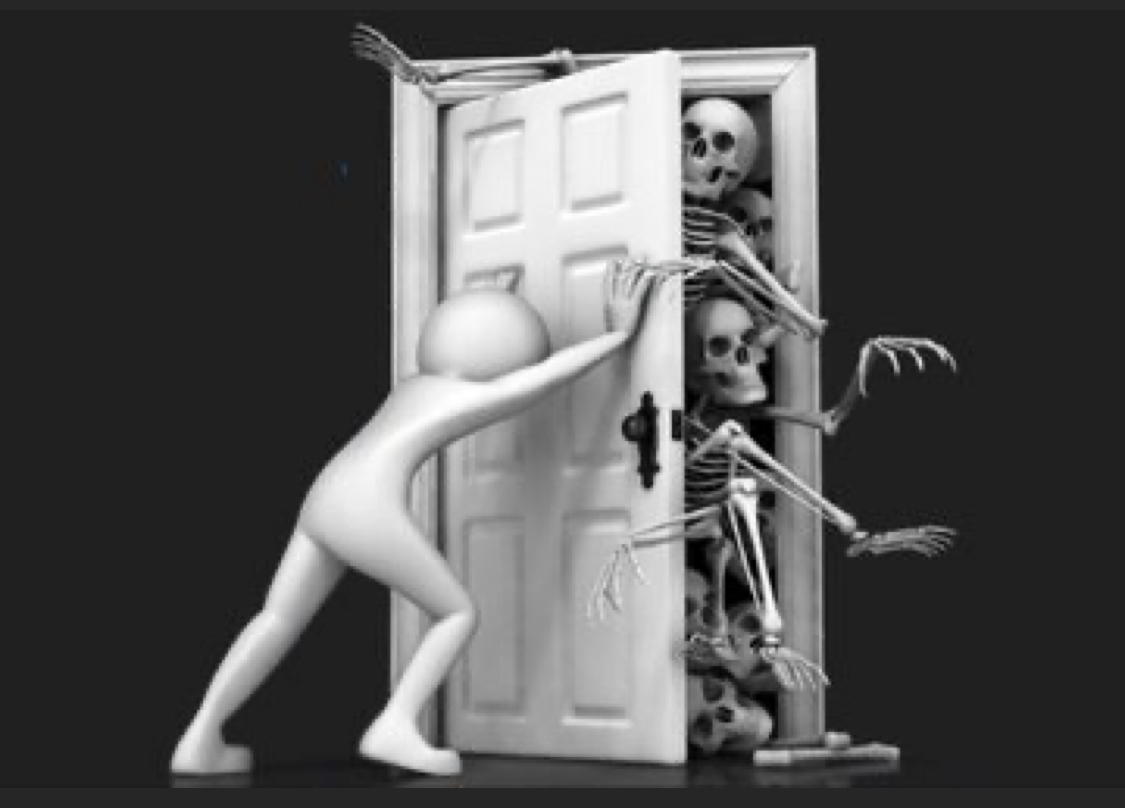
How do we find out about policies which have a NEGATIVE IMPACT?

Who holds the government to account when the bulk of the media doesn't?

Our Independent Media and satirists (yes, really, including  A complete list of the Liberal Party’s corruption over the last 7 years from The Chaser) have consistently done a great job exposing many less than desirable choices made by politicians.

Politicians' actions matter more than words!

Shadow Minister for Government Accountability, Kristina Keneally suggests we "look at [politicians] actions and ask who they stand for". (National Press Club youtube & transcript )

"Boring" I hear you say, or "I haven't got time for that."

In that case, take as little as 1 1/2 minutes to find out whether the federal politician in your seat is using your vote to support things you want - or just SAYING the right words.

How?

THEY VOTE FOR YOU

theyvoteforyou.org.au

Do politicians' actions support the positive, vote catching words on their marketing and websites or not?

For example, does the Minister for the Environment vote FOR policies that help or hinder endangered species, the Great Barrier Reef, water security for us AND our environment?

Now, back to Kristina Keneally's address.

The Federal government and media didn’t stand up for aged care residents, they didn’t stand up for Robodebt victims, and they aren’t standing up for workers who need secure jobs and a wage rise.

She says it's her "job to call-out every government rort and racket, every broken promise, every instance of the Liberals and the Nationals putting their donors and their cronies ahead of the national interest." 

Subscribe to some of our Independent media, because LNP politicians' wrongdoing won't make headlines in the Murdoch media because:

"proper scrutiny and real accountability depends on issues being carried / into the homes and minds of your readers, listeners and viewers." And this is something the Murdock media wants to avoid as much as possible. Our ignorance is to their benefit.

When faith and respect in democracy is undermined, democracy is weakened too.

Integrity in politics matters

It matters to the health and strength of our democracy.

It matters to the state of our economy and the quality of Australians’ lives. 

Corruption in politics matters 

Keneally states that exposing acts of corruption doesn’t damage the standing of politics.
 
Corruption itself does that.  Even more so when corrupt acts go unpunished. When they’re ignored, or worse, rewarded. 
 
When there are seemingly no consequences for gross incompetence and no penalties for scandalous negligence – that’s what undermines belief in the system and respect for the institution. 

In her address, she discusses the escapades of some ministers and the lack of accountability either from the Prime Minister or the mainstream media.

It doesn't inspire confidence or trust in the system, and when independent bodies like the Audit Office find problems – as they have with the airport dodgy land deal in Sydney and Sports Rorts – Morrison responded by cutting their funding.  

Conventions and Institutions eroded 

The erosion of conventions and institutions that uphold democratic freedoms combined with social media, disinformation and foreign interference to sway voters, is a wakeup call that we must preserve and uphold the bedrocks of Australian democracy, including:

  • An independent Australian Electoral Commission
  • Compulsory Voting
  • The rule of law, an independent judiciary and independent law enforcement and national security agencies – with appropriate oversight, especially on intrusive powers
  • Freedom of the press and public interest journalism
  • Freedoms of religion, association, and speech, and
  • Oversight and accountability mechanisms, provided by bodies like the Australian National Audit Office, Senate estimates, and state-based Integrity Commissions.

Satisfaction with Australian democracy has more than halved in the last decade, down from 86% to 41%.

Australians have low expectations and cynical views of our Government 

Distrust and disengagement allow failure to go unaddressed, and self-interest to be served.

When voters’ cynicism grows, politicians who serve their own political purposes flourish, and we're caught in a vicious, self fulfilling cycle of disengagement and despair.

 "It does matter who you vote for, they're not all the same."

Annoyed people take the easy option and donkey vote, or follow the loudest voices on the bandwagon to be on the "winning side".

So when there's significant coverage FOR one group and AGAINST others, the alternatives will have difficulty finding any traction no matter how good their policies.

To help prevent further erosion of democratic norms and expectations, we can encourage people we know to take an interest in our collective future and DON'T OUTSOURCE DECISION MAKING TO VESTED INTERESTS INCLUDING FOREIGN MEDIA MAGNATES.

A final word from KK:

The most important duty of elected representatives is to deliver support quickly and provide confidence to the Australian people that the parliament is on their side & solutions will be found.

Some of our Independent Media!


Tuesday, 4 February 2014

On politics, ethics, integrity and lying.

I


From The Guardian

"It is hard to imagine how he thinks – having made such a point of the importance of keeping election promises, right down to the footnotes – that he will not be judged by precisely the same authenticity standard he used so implacably against his political opponents. 
If you promised to match school funding dollar for dollar over the next four years – if you promised that every single school in Australia gets the same deal whether there is a Labor government or a Coalition government after 7 September – then that's what you promised. 
You cannot subsequently put it down to some well-meaning person's hallucination, a mass delusion, as Abbott suggested on the Bolt Report on Sunday. "But Andrew, we are going to keep our promise. We are going to keep the promise that we actually made, not the promise that some people thought that we made or the promise that some people might have liked us to make. We're going to keep the promise that we actually made."
Katharine Murphy goes on to talk about the political campaign fudge - it's expected, it what happens in elections.
...
To fudge information is to avoid making something clear. Many of us do it with an (almost) clear conscience in response to questions about the style of clothing a friend may be about to purchase, and similar things which don't have a major impact on anyone else.


The above article uses the word fudge in an interesting way. It softens and almost lightens a very serious issue. After all, to call a Prime Minister a liar is unlikely to be something a responsible journalist would do without due consideration. (I'm thinking here of the photos of a grinning Abbott in front of posters of the then PM Julia Gillard, making a pun on her name - juliar .) 


At what stage does a "fudge" become a lie? At what stage are the standards which are expected of children, and of employees in the workplace - to be honest and to tell the truthapplied to adults in parliament?

If a person applies for a job and lies at interview, is hired and is found out to have lied, or fudges figures or information, the employer will take a dim view of the falsehood, and will most likely fire the person. To lie is considered to be a serious breach of appropriate behaviour, and there are consequences.

A scientist who 'fudges' data, who is shoddy and falsifies results will be named and shamed. We expect their work to be free from bias, for results to be presented accurately and as such their papers are subject to scrutiny from qualified peers. If something is amiss, steps are taken to correct the information

Yet politicians aren't held to the same standards expected elsewhere in society. Given what were learning about addiction and money as well as addiction and power, it is an oversight where we, the public are likely to lose.

In a speech to the UK House of Lords in 1770, the British Prime Minister said: "Unlimited power is apt to corrupt the minds of those who possess it." (here)

Abuse of power has been known since Roman times - Isn't it time to look the implications seriously and to attempt to address the issue before societies are ruined?

Is it acceptable for a politician, running for the highest office in a country, to "fudge" information relating to education? to healthcare? to issues which honesty and clarity would be more beneficial to voters PRIOR to an election?

Do we accept (or even expect) the 'fudging' of ethics, of integrity, of honesty? How can those in power be held accountable if we don't know which statements about policy are true and which are lies, when they're both presented as truths? Are we being taught to assume that everything a politician says is a lie? to expect the opposite of what's stated?

It's an appalling state of affairs when what's being affected is our lives, our liberties, our services. When it's a country which is being governed and voters expect to be lied to, it's vastly different to whether a pair of jeans suits a friend. It's serious and can have dire and unexpected consequences for those who expect a modicum of honesty and decency from their representatives.

How can you make an informed decision if lying is more common than honesty?

The voter then has to contort their thinking to go along the lines of:

If he says this then he probably means that, but then again, it could be something else entirely, depending on what way the wind's blowing and the state of his digestion. "

Trust in relationships is eroded when one partner lies, shifts blame and is shown by words and actions to be self-serving, unreliable and dishonest. And yet, it's what we've learnt to expect from some of those who have some of the most influential jobs in the country ... by word and deed, too many politicians have taught the electorate not to trust them, and I believe we're all diminished as a result.

Our elected representatives would do well to pause often, and reflect deeply on the words of Stanley Melbourne Bruce, Australia's Prime Minister, 1923 - 29. 

"May those who enter this open door 
govern with justice, reason 
and equal favour to all. 
May they do so in humility and without self-interest. 
May they think and act nationally. 
May they speak with the voice of those who sent them here
 - the voice of the people." 
9 May 1927

Old Parliament House, Canberra.


...

Tuesday, 31 January 2012

GM foods - why is the public suspicious?

The video link to Science Under Attack from SBS On Demand will only be available for 13 days from the date of posting in this blog - it will expire by the 12th Feb 2012. The documentary looks at the responsibility of scientists to present their findings in a way that is understandable by everyday people. Link here.


The programme is described as follows "Nobel Prize winner Sir Paul Nurse examines why science appears to be under attack, and why public trust in key scientific theories has been eroded - from the theory that man-made climate change is warming our planet, to the safety of GM food, or that HIV causes AIDS."


It's well worth viewing to get a feel for the complexity of the scientific process and the challenges scientists face. However there was one aspect that I felt could have been explored in much more depth and that is the suspicion surrounding GM foods. 


I've read that the advances in technology of genetically modified food and disease resistant strains are what will be vital for our very survival as our climate becomes more volatile. That I understand. 


The missing link in my mind was the discussion about how companies doing the research into GM foods take complete control over seed 'ownership' and via laws such as the NZ Food Bill, threaten the health, livelihood and resilience of communities the world over


Powerful companies could also manipulate data to hide adverse findings and gag or dismiss whistle blowers such as is reported to have happened with United States FDA scientists and doctors studying medical devices for patients including those with cancer.  Link here.  
The Food and Drug Administration secretly monitored the personal e-mail of a group of its own scientists and doctors after they warned Congress that the agency was approving medical devices that they believed posed unacceptable risks to patients, government documents show.
It would appear that business interests of the FDA took precedence over the safety concerns of its own reputable professionals. These professionals are reported to have since been dismissed. 
"Information garnered this way [accessing private emails] eventually contributed to the harassment or dismissal of all six of the FDA employees, the suit alleges. All had worked in an office responsible for reviewing devices for cancer screening and other purposes". 
There was apparently a claim that the whistle blowing  "improperly disclosed confidential business information about the devices" even though the the scientists and doctors working on the devices "believed [they] posed unacceptable risks to patients." 

I'll now move on to a bill (NZ Government Food Bill 160-2)  which apparently allows for a range of very restrictive controls about what citizens may or may not grow in the privacy of their back yard, and how they choose to sell or barter their produce, how often they can sell it, as well as how they gather and share seed.


New Zealanders are understandably outraged. They have a fantastic system of roadside stalls and vibrant local communities interested in becoming increasing self sufficient. 


They grow interesting varieties of fruit and vegetables for sale at roadside stalls, for trading at food co-ops, for bartering as well as for fun! 


The NZ Government Food Bill is reportedly backed by the very same FDA mentioned above. The same group who appear to have gagged and bullied their own employees, the employees who alerted the US Congress to concerns about unacceptable risks in some medical devices. If it is indeed the same FDA, no wonder New Zealanders are concerned. 


A comprehensive discussion is here with links to more in-depth commentary. Here is a short excerpt from the post:
I read that the bill is being brought in because of the WTO, which of course has the US FDA behind it, and of course that is influenced by big business (Monsanto and other players).  It looks like this NZ food bill will pave the way to reduce the plant diversity and small owner operations in New Zealand, for example by way of controlling the legality of seed saving and trading/barter/giving away; all will be potentially illegal.  The best website to read about the problems with the new bill is http://nzfoodsecurity.org 
By controlling seeds, the bill takes the power to grow food away from the public and puts it in the hands of seed companies.
Growing food for distribution must be authorised, even for “cottage industries”, and such authorisation can be denied.
Under the Food Bill, Police acting as Food Safety Officers can raid premises without a warrant, using all equipment they deem necessary – including guns.
Seed banks and seed sharing networks could be closed down in they don't get sufficient approval. 
More information here.


Globally we're facing increasingly severe and extreme climate events. We face immense challenges associated with rapidly depleting fossil fuel reserves. Resourceful communities do not need restrictive bills that could erode their vital formal and informal networks as they face these challenges with courage and hope. They need support, not demoralising restrictions.


Already communities around the world are working diligently to be more self reliant and self sufficient. This should be celebrated and supported by all levels of government  - not dangerously restricted. That these bills play into the hands of companies and organisations some of which have a track record of not having the best interests of the community at heart is disgusting. 


Too few people in too few companies have too much power.  They are showing obscene levels of greed and manipulation to ensure they rule absolutely. They are acting like bullies. Unfortunately many governments are bowing to the pressure. That's wrong. We all suffer. 


No wonder there is a climate of distrust surrounding GM foods and some of the companies promoting them. 


It's a shame this aspect wasn't covered in the programme as I suspect the problem lies not so much with the food produced but with the companies involved. 


A petition objecting to this bill is here.


And, just in: Monsanto voted worst company of 2011 by Natural Society -- for "threatening both human health and the environment." here


and Monsanto to face biopiracy charges in India here


What do you think?
.


Monday, 30 January 2012

Where are our wise leaders?

Even though this post isn't about our physical health, it's a good analogy for the scenarios unfolding with some restrictive laws worldwide. Bear with me for a few moments while I explain that there is a cost to us not taking an interest in and acting on information about censorship of the internet, and how it's a little like not having a health checkup and acting thoughtfully on any scary results.

As men and women we are advised to regularly have check ups and for a good reason, they can detect problems before they become serious so they can be treated appropriately.

The same as it's wise to understand your personal health issues, it's important for all of us to understand the current issue with censorship (as best we can with the information available). I urge you to be informed and make up our own minds independently of those who have vested interests in filtering information for their own ends. It's not fun, but it is sensible to know what is at stake for our collective and societal health.

Below is a video that gives easy to understand information about internet censorship as currently proposed and/or has been legislated on depending on your country. From what I can understand, those in positions of power appear to have been caught up in the fear mongering about issues like child porn, piracy and terrorism. They appear to have made hasty knee jerk decisions that result in the cure being worse than the disease - apparently most countries already have adequate laws and ACTA is an additional act.
  • Child porn? Yes it's an issue. It won't go away with passing this draconian law. People into child porn will find another way to get their fix. To pretend otherwise is wishful thinking.
  • Piracy? Is it really the issue the big media companies and their mega million dollar industries claim? Not according to specialists in the field. Sensible alternatives to the censorship bills have been suggested.
  • Terrorism? Bad stuff, but have you noticed that terrorists don't seem to worry about laws? They overlook them. Terrorism in one form or another has, unfortunately, been around for millennia. They'll find a way around these censorship laws as well.
The possibility of excessive legislation being used inappropriately and in the interests of big business to gag whistleblowers is huge, and could be a serious threat to our respective democracies.

We need whistle blowers in our society. These people show amazing courage in exploring and shedding light on corruption. We mightn't like what they tell us, but they expose injustice, corporate wrongdoing and coverups. Ultimately society is strengthened as a direct result of their actions. People, groups and communities who share information on social justice issues could be gagged by those with vested interests. That's wrong.  In addition, the bills appear to be unwieldily, cumbersome and staggeringly expensive to implement effectively, fairly and ethically.

These bills can apparently affect free access to all sorts of information from educational material, open political discussion, discussion about the how our food is manufactured and tainted (think of the melamine scandal in China) environment, health, and scientific matters is frightening.

Personally I'm glad there were courageous whistle blowers in China. Companies shouldn't have been lacing milk products with melamine - this is the kind of thing we need to know and be able to share without fear of retribution.

This video is quite long. However it's a very informative presentation of copyright (which sounds impossible, but it's true!) It's easy to listen to and clearly presented. I urge you to listen - the main speaker begins about 10 minutes in.

And if after listening, you decide to take action in the form of signing a petition you can do that here.


Wednesday, 25 January 2012

The demise of democracy?

East Side Gallery. Berlin 2009.
I wonder how many citizens of the US are aware of the deep concern many of us in the rest of the world have about what is happening in your country right now.

The passing by President Obama of the NDAA bill on New Year's Eve is truly frightening.

Are you aware that US citizens are able to be detained indefinitely without trial in their own country?

We know this happens in China, North Korea and other countries around the world. We see the fear and anguish of family and friends not knowing what has happened to their loved ones. They're not allowed to visit, they lose their rights - and they have no ability to speak out, to complain, to prove their innocence.

We get all self righteous and complain, often loudly, when innocent people are detained indefinitely in "other countries", we march, we write letters, we stick our noses in and agitate for change - for them to be more like us.

Is this the 'us' we want them to be more like?

This video is a mere 6 minutes. It's worth watching.

What would you want your loved ones to do if you were detained indefinitely without trial? Who would you turn to?

Wouldn't you wish they'd at least tried to have the bill removed? Wouldn't you want them to say "I did my best, I agitated, I wrote letters to the papers, I marched, I spoke out."

Is it better to speak out and fail than not to speak out at all?

Wednesday, 18 January 2012

Why vote?

"In the face of all the challenges we face today, is my optimism about the future of humanity idealistic? Perhaps it is. Is it unrealistic? Certainly not. To remain indifferent to the challenges we face is indefensible. If the goal is noble, whether or not it is realized within our lifetime is largely irrelevant. What we must do therefore is to strive and persevere and never give up." His Holiness the Dalai Lama.
Some years ago I was flabbergasted when a friend I had previously respected said he had never voted. He insisted it wasn't because he was lazy or disinterested, but that it was his way of objecting to the whole political system and what he perceived as corruption and politicians being bought out by big business. At that stage my primary objection was that thousands of men and women had fought to preserve our democracies. They'd lost their limbs, minds and lives to ensure we wouldn't live under tyrants in various guises. The choice not to vote seemed a cop out to me.

I've thought about that conversation a lot since, and here's my current thinking about why I believe it's important for everyone to vote - particularly in countries where voting isn't compulsory.

I've counted electoral votes here in Australia, where voting is compulsory, and have seen first hand how important every vote is. Individually it doesn't seem to matter much, and it's easy to imagine your single vote is insignificant. But when your voice joins in with hundreds and thousands of others it has an effect. It can unsettle some candidates who thought they were sitting pretty and encourage others for next time.  (Interview with a new candidate here) It can make candidates think - they listen to the mass of voices.

Are you visible?
Some people, I know, are concerned that voting undermines your freedoms. A position I admit I have difficulty understanding. Consider the following: When you choose not to vote, you become invisible. Well orchestrated, powerful groups with vested interests and very deep pockets will mobilise their forces and take over to manipulate the result to support their ends. Do lobby groups sit back complacently and do nothing? No, because they know how important voting is - they want to have the loudest voice, they want to be visible.

Who speaks for you?
Each time you choose not to vote, each time you remain silent and don't speak out against corruption, injustice and environmental degradation, you willingly give your power to others who are prepared to make the effort. They speak on your behalf whether you agree with them or not. You give your freedom away to those who will happily grab and run with the mandate to do what they will.

By choosing to take an interest and voting "with intent", you make it more difficult for extremist and special interest groups to manipulate: You make it difficult for them to manipulate the economy, to manipulate the finance sector, to manipulate the environment - for obscene profits and payments, all of which are unsustainable and frankly, disgusting given the inequities around the globe.

You give away your freedoms when you choose not to vote. The result is the potential undermining of our collective freedoms. The outcome of elections in one country impacts on those of us in other countries, and not always for the better.

There are repercussions from elections around the globe because our systems are so interlinked.

Once freedoms have been lost, they're incredible difficult, and maybe impossible to claw back. Don't let that happen.

To use the excuse that elections are a foregone conclusion is completely unconvincing. It's as pathetic as not applying for a job because you don't have the perfect set of requirements. If you sit back and don't do anything, of course you'll get a crap result.

I've heard people say "I don't vote, it just encourages them", "My vote won't make any difference so I won't bother" Pah! There's another saying down here in Australia, we vote to "Keep the bastards honest".

Of course it doesn't always go the way I want, but I enjoy the liberty, the freedom, the joy and frustration of democracy in action. Having travelled extensively in countries where freedom is a dangerous dream, where to speak out in favour of democracy and against corruption can lead to indefinite detention, where extreme censorship is part and parcel of everyday life, the ability to vote freely for the candidate of my choice is something I don't take lightly.

Voting is your opportunity to voice anger, disapproval & frustration about things like inaction on climate issues, our addiction to fossil fuels, the need for sustainability, dreadful social inequity but also to encourage those who are working towards a better world.

Be a supporting voice
The people, companies and politicians working toward a more sustainable, equitable world - those who think globally - need all the support you can give them.  It's lonely being a dissenting voice, particularly when well funded, vested interests are nipping at your heels and perhaps offering a bit of incentive to encourage you to sell your soul.

Let the 'good guys' know they're doing well! Write to them - even a simple one line comment - it'll lift their spirits and help keep them on the right track! Write to the tardy ones and encourage them to lift their game.

You know the expression: "Silence is consent" ... if you don't vote, if you don't write to the politicians and agitate for change, if you're silent, they assume you agree with what they're doing. 

Politicians listen to the loudest voices. Make your voice count. 

Link here to NY Times article on compulsory voting, published in 2006, but still relevant today.
.