Showing posts with label population. Show all posts

Tuesday, 12 August 2014

Part J - Teaching in China - from Jerilderie to Jiangsu

I don't live in Jerilderie, but it's a lovely sounding word, and along with Jindabine and Jan Juc, when I hear it, I know I'm home! 

Did you know Australia has its own Great Wall of China? It's a natural rock feature in the Flinders Ranges in South Australia, and whilst not on the scale of the man-made Chinese one, it's pretty impressive. 
The photos here are of similar rock formations in a nearby area.
It's dry country, harsh and unforgiving. Plants and trees thrive in their own way, but they're not lush - they've adapted to the climate extremes - the interior of Australia isn't always hot, and nights can be below freezing. Spindly leaves cling to often bare branches. Grasses tend to be dry, unfriendly, spiky, and tussocks, well separated from each other so they don't compete for elusive moisture, struggle from sandy soil which is strewn with vicious prickles.

In stark contrast, the people in Jiangsu province live in a rich fertile area. The massive plane is generously graced with hundreds of flowing rivers, and there are also many natural and manmade lakes and reservoirs. The canals we passed had barges and boats chugging purposefully along and seemed to be transporting goods downstream. There were ducks, geese, and kilometer after kilometer of mixed crop production, huge areas undercover, many more open to the elements. We drove for around 5 hours and even when we left the freeway to turn off to Xuzhou the abundant patchwork crops were still growing prolifically.
The 102,600square km province supports a population of around 80 million people, roughly 4 times that of Australia. This is rich land, and while agriculture is of less importance now than in the past, it still produces a wide variety of crops including rice, wheat, cotton, oil seed, fruit, and lush vegetables. Efforts are being made to produce more organic foods and I often saw watermelon in stalls so fresh that the leaves on the stems hadn't wilted. 
There was a constant heat haze when we were there, which seemed to stretch for hundreds of kilometres, making distant mountains indistinct and gauzy. And everywhere, there's construction - I've never seen so many cranes!

How is it possible to explain to people whose whole life experience is of rich land, reliable rainfall and abundant crops, that the bulk of Australia's vast interior has nothing remotely resembling what they live with. It's their norm, what they've grown up with. Until you've driven day after day through the nothingness that is Australia's interior, it's hard to comprehend.
A dry riverbed would be un-understandable to many people. This feature is called a river on the signs and maps ... surely rivers have water in them ... don't they?


I'd asked my students what kinds of things they wanted to learn about Australia, and geography and history were high on the list. Thank goodness I had lots of photos and a good general knowledge to be able to discuss the things they were interested in, including the Great Artesian Basin, rainfall, floods, drought, population hubs and animals, as well as the British acquisition of the country and the decimation of aboriginal people with white settlement. They kept asking questions and were genuinely interested. 

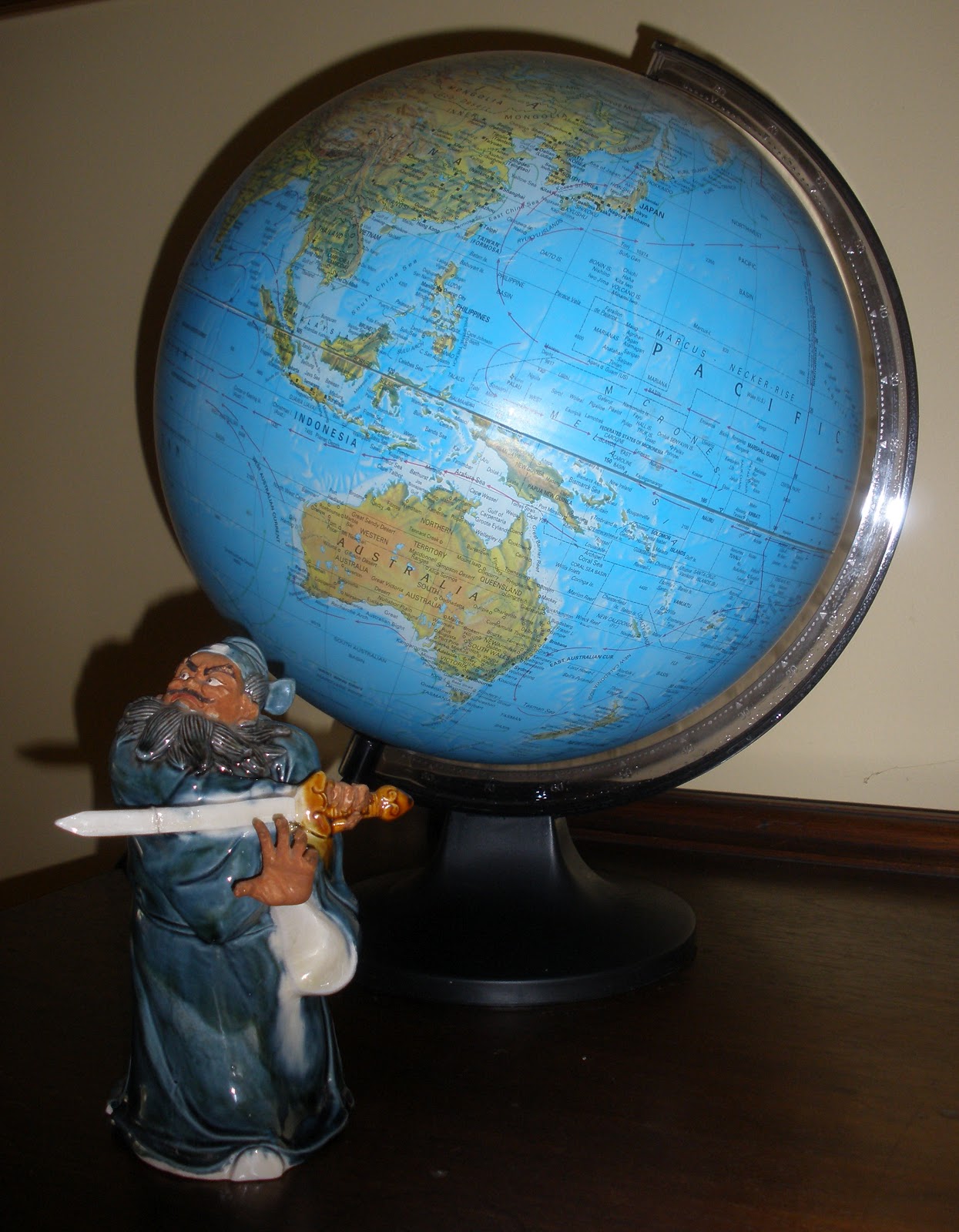
Why on earth hadn’t I thought of taking a map of Australia, a world map, and a globe? A piece of chalk and uncertain drawing of the country and landmarks had to suffice! 


My previous posts about Teaching in China were our ArrivalBanquets, Culture and Comfort Foods, DrivingExercise, Fabulous Food (revisited!), Games, History and Illness. The next one will be about Kenny!


.

Saturday, 11 August 2012

Big bangs, smoke and fun @ National Science Week 2012

Ya gotta love science!

Not only for the spectacular drama and big bangs, but for the delicate finesse of artistic creativity, researching our environments to ascertain their health, delving into cancer cells and DNA, learning from the stars, or working out how many people particular regions can sustain. I don't pretend to understand it all, but I love that there are people working in all these (and more) areas to better understand the complexities of our world and beyond.

National Science Week is a celebration of science, and the opening today in Brisbane's Queen Street Mall went off with a dramatic bang! Students, researchers and assorted scientists were scattered around the mall sharing insights and enthusiasm.

Garbage bins are usually pretty boring things, but today one was put to good use when liquid nitrogen was carefully poured in a drink bottle and put in a container inside a wheelie bin. The lid was quickly shut and the presenters scampered to a safe distance. An ear popping explosion was the result, with copious amounts of smoke, a wildly rocking bin and hugely smiling emos who'd been watching with feigned disinterest from the sidelines. Not bad at all!

I learnt that listening to the bush is not only delightful, but a valid way to ascertain the health (or otherwise) of environments. Scientists record the sounds, remove the extraneous "noise" then analyse the results. By doing this, (which is a rather complex business) it's possible to discover such things as the infiltration of cane toads to the west and south of the country (seriously not good for native animals of any size), the range and health of particular communities of animals, birds or frogs and how the populations are coping with assorted environmental factors.  

You can listen to some of the sounds of the Australian bush and learn a bit more at www.bush.fm
I love staring at the night sky, looking at the depth and range of colours, scanning for meteors, waving at the International Space Station and looking for satellites. Others become animated and enthusiastic when in the vicinity of telescopes of varying sizes. I heard oohs and aahs as people of all ages concentrated to look at sunspots and held my breath, hoping that no one would trip over the tripods that looked far too insecure to allow the bumbling public near.
Dr Jennifer  Loy seemed to be fielding quite a few questions along the lines of "Where can I get one of those?" and  "That looks like a great course" as she demonstrated a small tabletop 3D printer. I'd heard and seen some uses for 3D printers, but I'd never seen them used for jewellery and other elegant work. The lamp shade was exquisite and the jewellery would be fun to wear. As for more practical uses, glasses frames came to mind, and I expect a clever person could compete well with the outrageously priced stock in many spectacle stores.

Starting a conversation with anyone who is passionate about their particular field of interest can be a fraught business. Are they going to be interesting? Are you going to, for instance, have to resort to chewing your leg off to get away from a tediously boring, long winded, excruciatingly painful, bore? Thankfully, no dramatic, messy newsworthy stories were evident today. In fact, quite the opposite. At times I wondered if the scientists and presenters found the enthusiasm of the public a bit, well, enthusiastic to be honest. Wide eyed wonder, and lots of questions seemed par for the course.

I'm looking forward to having time to explore the Carrying Capacity Dashboard which "is an online application that estimates the resources needed to support a human population" given particular lifestyle choices. You can explore what happens when there are changes in such things as diet, energy usage, agricultural techniques and recycling practices. Adapting our lifestyles has a dramatic effect on the estimated number of people that different areas in Australia can carry sustainably. Given what I learnt today, it's clear some areas are already well beyond their ability to be sustainable.

Australia faces huge challenges with our changing climate. We already have divisive and competing land use demands - farming versus mining, agriculture versus housing development subdivisions.

Communities and states are at loggerheads about fair and equitable use of water - should it be used for farming, irrigation, mining? How much for manufacturing? Which areas get how much? Who decides? What proportion should be left in the environment for healthy rivers and groundwater? What about contaminants? How do we rationalise the use of this impermanent, precious natural resource?

It's vital that our policy makers address these issues with a deep understanding of the ramifications of their decisions and not make decisions as a knee-jerk response or for short term electoral gains or to satisfy the most strident lobbyists. Carrying Capacity Dashboard is, I suspect, going to provoke a lot of discussion, and hopefully some deep reflection on the sort of society we hope to become.

National Science Week is just beginning! To find out what's on near you, go to http://www.scienceweek.net.au/ it's not just big bangs to entertain the kid in us all, there's also challenging, entertaining, creative, welcoming sessions around the country for people from all walks of life.


.

Tuesday, 1 May 2012

An A to Z of Climate Matters.

April 2012. An A-Z of Climate Matters. 
There is a link in the sidebar to the A-Z blogging challenge hosted by Arlee Bird and his wonderful team.

A is for Advertising - a brief look at the methods media, vested interests and the advertising industry use to sway opinion regarding climate change rather than to share facts.
B is for Biodiversity - why it's important for our very survival on earth.
C is for Change - how we often resist it, fear it and avoid it, but how we also need to face it head on if we're to negotiate climate change and energy depletion with hope and confidence.
D is for Desertification - what can happen to lands which are overgrazed, and have every natural living thing removed for the planting of mono crops.
E is for Eat - what we choose to eat, how much, how often and where it's imported from has major implications for food security. Farting cows make their appearance here.
F is for Fracking - a method of extracting fossil fuels from deep under the earth.
G is for Greenhouse - the gasses which we're emitting into the atmosphere at such a rapid rate aren't healthy and are contributing to a toxic blend of chemicals which will last many hundreds of years. We don't breathe these easily, nor do animals. Trees that normally absorb carbon-dioxide aren't keeping up with our emissions.
H is for Health - Our mental and physical health is intricately tied with our climate. Increasingly frequent and severe weather events such as fire, drought and flood have impacts on everyone involved.
I is for Insects - We need them! Without creepy crawlies and bees, humankind is unlikely to survive. Toxic chemicals used on crops as pesticides kill not only "pests" but helpful critters too.
J is for Jellyfish - these can survive and thrive in ocean areas which have been overfished.
K is for Kilter - as in Our climate is out of kilter and so are some of our lifestyle choices.
L is for Leadership - innovative, farsighted, visionary, leaders are rare and need to be encouraged and celebrated.
M is for Mangroves - mangroves are the most interesting trees! They're salt tolerant meaning they can grow in sea water, and can deal with more carbon than any other tree.
N is for Notice - notice how you can make energy savings in your home AND save money!
O is for Oil - such a recent discovery and one which has infiltrated almost all our lives. In fact it's probably fair to say we're addicted to it and as with any addiction, breaking it could be a bit of a challenge. but it will run out, so perhaps it's not a bad idea to have a "Plan B".
P is for Plastics and Pollution - plastics are a wonderful invention, and a byproduct of oil. They're extremely handy for all sorts of things. Unfortunately products are often discarded thoughtlessly and add to the increasing problem of pollution.
Q is for Quadruple bottom line - a little bit of accounting - a different way of looking at what is valuable for businesses. Interesting rather than daunting :)
R is for Responsibility - hyper-consumption has an impact on using fossil fuels and therefore our climate.
S is for Soil - you don't have to get down and dirty to appreciate how necessary healthy soil is! Healthy soil = healthy plants. Healthy plants = healthy us.
T is for Trees - tall, majestic and leafy or stunted and straggly. No matter what they look like, trees are vital to maintain a breathable atmosphere, to stabilise soil and to assist with biodiversity.
U is for Urban heat island - cities absorb heat so people to use more air-conditioning. Greening our cities creates cooler, healthier lifestyles.
V is for Values - values underpin much of what we do and give our lives meaning. When people are out of touch with their values, their lives can lack direction and be unhappy and empty.
W is for Water - Water wars. Water disputes. Country against country, region against region. Farming, people, mining, all demanding more of this increasingly polluted vital resource.
X is for eXtreme weather - did it really take me this long to discuss weather?
Y is for Yesterday - sing the words from The Beatles song "Yesterday" to get a sense of this letter.
Z is for Zero - Zero population growth - improved quality of life for mums, children, families and communities. Enough food and water to go around. Equity and balance. So easy, yet so hard for many to accept the need for reliable modern contraception.

And now ... a well earned celebration :D

.

Monday, 30 April 2012

Climate Matters. Z is for Zero

This post is for Z in the A-Z Blogging Challenge 2012. Link in the sidebar.


Zero population growth
Zero economic growth
Zero waste
Zero carbon emissions.

How difficult it is to choose only one of the above to dip in to for the last letter of the alphabet. There's so much left to blog about, so much left unsaid.  I began back at the beginning on the month looking at the power vested interests, the media and the advertising industry have over our perceptions and understanding of climate change. I've dipped into different aspects of this immensely complex and challenging subject with each subsequent letter of the alphabet.

Here we are at the end of the month, and not much has changed; forests are being felled. Creatures are being made extinct. Lands are being eroded. Arable land is being mined at an alarming pace. People are dying from climate related issues; lack of clean drinking water, malnutrition, flooding and drought. Australia is as tardy as ever in tackling the issue proactively, creatively and with courage, commitment and vision. Our politicians seem to prefer the "business as usual" scenario; "Let's not rock the boat, people might get a bit agitated when they understand the mess we've created and allowed to continue".

But there's one thing that could happen, relatively easily and economically that would make what is a potentially disastrous situation just a little better.

Zero population growth.


It took around 200,000 years for the population on Earth to get to 1 billion, but only just over another 200 years for it to reach 7 billion. An astounding 6 billion people were born in 200 years. That’s incredible! It’s the greatest population the world has ever known, and it brings with it challenges never before imagined or experienced.

China tackled the issue of overpopulation with determination
 and an awareness that to ignore the problem would be disastrous.
How to adequately sustain, shelter and feed the sheer volume of people is mind boggling to consider. Added to this is the goal of maintaining the Earth’s habitability so that future generations can breathe the air, till the earth, drink fresh water and enjoy a reasonable standard of living. We have a challenge of such magnitude and complexity that many people choose to ignore it.

Our changing climate with new patterns of drought, flood and storms is going to take some getting used to. Our habit of relying on easily accessible, cheap fossil fuels for energy will need to be addressed. Ideally this will be done creatively, proactively and without malice or obstruction from those with a vested interest in maintaining the status quo of an addiction past its use-by date. 

Companies are made up of individuals. Individuals have choices. Companies have choices. My dream is that every employee in every company around the world looks at the impact of their current policies with seeing eyes. That they raise their voices if there is coercion, bullying, unethical, cruel, inhumane or immoral behaviour. My nightmare is that they don’t have the ability to do this, and that our children, grand children and great grandchildren will suffer horribly as a result. The worst case scenario is that current policies and actions could lead to the final zero for humankind.

To honestly and courageously face these challenges will take vision, wisdom and the creativity and collaboration of peoples from all walks of life from all countries in the world. This is not a time for bullying, coercive tactics, manipulation and lying.

Both genders should be involved. At present, women are too often silenced by groups intent of maintaining their own power and the subservience of women. One way this is achieved is to deny women access to adequate, modern methods of birth control. “Barefoot, pregnant and in the kitchen” is the reality for billions of women worldwide. Or perhaps more accurate is “barefoot, underaged, uneducated, pregnant and malnourished”. It's an insidious way to keep much of the world's population silent and compliant.

Few of us would choose to be born into poverty, into lands where food and water supplies are intermittent, where death in childbirth is common, where girls are taken as brides when they’re still children themselves and where education is a dimly heard of luxury.

However, unless we address the issue of our Earth’s rapidly increasing population and assist it to drop to near zero, poverty, disease and malnourishment will be commonplace. More mouths to feed means more crops to be grown on less arable land, (see D - Desertification here). There will be more carbon emissions, if our energy and food (see E  -Eat here) sources remain unchanged - and more garbage in general. (P - Pollution here).

Conversely, it’s been shown that population stabilisation has enormous benefits to all aspects of health in the communities where it is adopted. Women and girls, their family members their lands and food systems are healthier and more productive. There’s more food and water to go around, less stress on health services and infrastructure and equally importantly, arable land and fishing grounds are able to recover and become more productive.

Reducing birth rates eases the pressure we place on natural resources, food systems, water sources, biodiversity, forests and the atmosphere.

Contraception and sound family planning are vital components of the complex issues we face in the years ahead as we try to balance the population with what can be maintained by our Earth’s resources.

In a recent discussion, Naomi Oreskes said something along the lines of: Resistance to accepting there are challenges ahead is related to not liking the implications on political, social and economic levels. Climate change is rejected because it has consequences for how we live our lives and what it means for us. These changes will be very significant and require a complete transformation of the energy system. (Link here.)

If we aren’t proactive, and consider the repercussions of inaction in a calm, measured thoughtful way, we will be reacting as events unfold which is neither wise nor desirable.

Have we got the courage, wisdom and humility to face the future with eyes wide open or not?


Last year I wrote - A-Z "An incomplete journey of workplace bullying" for Z, here, and Zero here.