Showing posts with label inspiration. Show all posts

Friday, 22 July 2011

Delectable sweetness?

It's yummy, but is it having a negative effect on our wellbeing?

Of course we're aware that biscuits, cakes and soft drinks are generously laced with sugars or sugar like products.  But when you're buying packaged and processed "convenience" foods it's a real challenge to decrease your sugar intake as it's been added to so many foods.

It's possible to avoid the obvious ones if you're determined, but as David Gillespie says in his blog  How Much Sugar  here: 
"A smoker is addicted to nicotine. Nicotine is found in cigarettes, cigars, tobacco, nicorettes and insecticide. It’s not the kind of thing you’re likely to come across by accident. In fact anyone consuming it, is doing so very much on purpose.  
If you decide that you no longer wish to be addicted to nicotine, there is a very short list of things you should stop doing:
Do not put cigarette in mouth.
If you discover a cigarette in your mouth do not light it.
Do not drink insecticide.
There. Done. Now you just need to wait about three weeks for the addiction to pass. Easy.
A Sugarer (the collective noun for people addicted to Sugar – and yes I did just make that up) has a much more daunting task ahead of them.
The active ingredient (from an addiction point of view) in sugar is fructose. Thanks to the marvels of modern food production, fructose is now embedded in almost every single food item on the supermarket shelf. Imagine how hard it would be stop smoking if everything you ate or drank contained the addictive ingredient.
Giving up fructose is far harder than giving up nicotine. You still have an addiction to fight but before you even get that far you’ve got to pick your way through a minefield of fructose filled foods." 
Well said David! Visit his informative website and blog for further information, Sweet Poison is (here) 

I was shopping this morning and dare I say, feeling just a little smug, after all I choose mostly fresh foods, and cook from scratch. I enjoy cooking (mostly ... when I have time). I'd been rabbiting on about hidden sugars and just out of curiosity had a look at some baby foods marketed as first solids, all pure, nothing added. All had at least 1 teaspoon of sugar per serve! Not just the fruit mixes, but the vegetable ones too. I hate to think what that does to the little ones emerging teeth, and so often you see young mums feeding their children convenience foods, then a fruit juice if not a soft drink that has been decanted into a baby bottle.

A browse through my pantry was in order now ... and were there any surprises?

You bet! The innocent looking and very handy herb blends have between 2 and three teaspoons per hundred grams, and are also stuffed with salts. I'm regularly adding a teaspoon or more of unnecessary sugar to meals that wouldn't be there if I'd used fresh herbs, and I don't want to think about that extra salt.

I knew tomato sauce was laden with salt and always choose the low salt option, but discovered that for each 20 ml (a modest sized dollop) there is one whole teaspoon of sugar. It's very easy to have double that at a barbeque, without really trying. However, if I chose my favourite Eggplant Pickle, there's a whopping two teaspoons per serve. Ouch.

What you can do 
Sugars aren't always labeled to be consumer friendly,  so you'll need to check out the labels of all foods very carefully if you want to cut down on those secreted away in foods.

There are a number of alternative names for sugars to look for on package labels - glucose, fructose, sucrose, lactose, maltose, corn syrup, dextrose.

No added sugar
What exactly does that mean? Simply that the manufacturer hasn't added any extra sugar to the product he's purchased. However, the product itself could be positively stuffed with sugar (or salt, or MSG or whatever)  and the label may be seen to be true and accurate.

I remember hearing about a rather scrumptious juice available at a juice bar here which claimed to have no added sugar. It emerged that whilst the juice bar didn't add sugar on the premises, their suppliers had already laced the beverage with generous quantities of sugar, but called it (correctly) fructose. I'd use the word obfuscation for that practise.

Health issues
As David cited, all of these extra sugars are creating massive health problems when they're over consumed, and as I've found, it's extremely challenging to be aware of all the food items where sugar is stashed, even when you're a relatively savvy consumer.

Given that the negative health effects may increase the risk of obesity, type 2 diabetes, leading to insulin resistance, not to mention tooth decay, I think it's worth being a wary consumer.  How about you?

.

Tuesday, 21 June 2011

Happiness and its Causes - Pre conference workshop

I think a good place to begin talking about happiness is at the pre-conference workshop I attended, and with some attempt at a definition of happiness.

Let’s start with what happiness isn’t: Happiness isn’t having what you want whenever you want it. That leads to a selfish attitude that isn’t good for you or those around you.

In the pre conference workshop "The Attention Revolution", the presenter Alan Wallace* described two types of happiness.

Hedonic happiness

We seek it externally; it feeds the senses and is when we try to feed our inner yearnings with “things” outside of ourselves. It's when we hope or expect a person, thing or event to MAKE us happy.

That’s a big ask of any person don’t you think? It’s a bit like saying “I can’t do it myself (ie make myself happy/content/satisfied) but I expect you to do it for me”. (And heaven help you if you can’t fulfil my wishes!) That’s a huge amount of pressure to put onto another person. I can’t help but think that if you want someone else to make you happy, it's a tad selfish.

Many people are addicted to the superficial feeling that hedonic happiness brings. They continually chase the sensation and are subject to the highs and subsequent lows when the sensation wears off or isn’t fulfilled. The craving is the same as with more publicised forms of addiction.

Alan Wallace described it as being similar to ADHD, and the inability to focus sustained attention. “Where can I go next?” “What can I buy next?” “What can I do to prevent boredom?” We’ve all known exercise junkies, workaholics, alcoholics, TVaholics, people always wired and gaming. Retail therapy anyone?

Many people indulge in hedonism to hide from emptiness and pain and as a “pick me up”. You may have noticed this tendency in yourself. What do you use to hide from yourself (warts and all), and what opportunities do you miss as a result?

Eudaimonic happiness


Alan Wallace and others refer to eudaimonic happiness as genuine happiness. It is an inner happiness which feeds the soul, and stems not from what we get from the world but from what we bring to it. He believes it stems from

  • An ethical way of life
  • Mental balance
  • Self knowledge

Genuine happiness isn’t subject to the ups and downs of hedonic happiness and provides us with longer-term stability and security.

More on how to begin to attain eudaimonic happiness later...

Other presenters at the conference included: Dr Jane Goodall, Dr Paul Ekman, Dr Russ Harris and His Holiness the Dalai Lama.

Topics for discussion included: "Cultivating Genuine Altruism", "What's Happening to our Children?" "Compassion", "Empathy", "The Nature of Depression",  "We are what we eat", "Music", "Resilience" and "Sex" - in all a very interesting variety of topics related to happiness!

*Alan Wallace trained and lived as a Buddhist monk. He has a degree in physics and the philosophy of science, and has a Ph.D in religious studies.

Many of his teachings are available in podcasts from here and here

**These are my observations, presented through the lens of my own biases and experience and not a verbatim transcription of the workshop or presentations.
.

Sunday, 29 May 2011

blog break

Hello,

I'm taking a blog break, and hope to be back mid to late June when I'll be at the 'Happiness and its Causes' conference in Brisbane. I hope to see you here when I return, full of interesting research into the brain and how we construct our own happiness.

till then

toodleoo

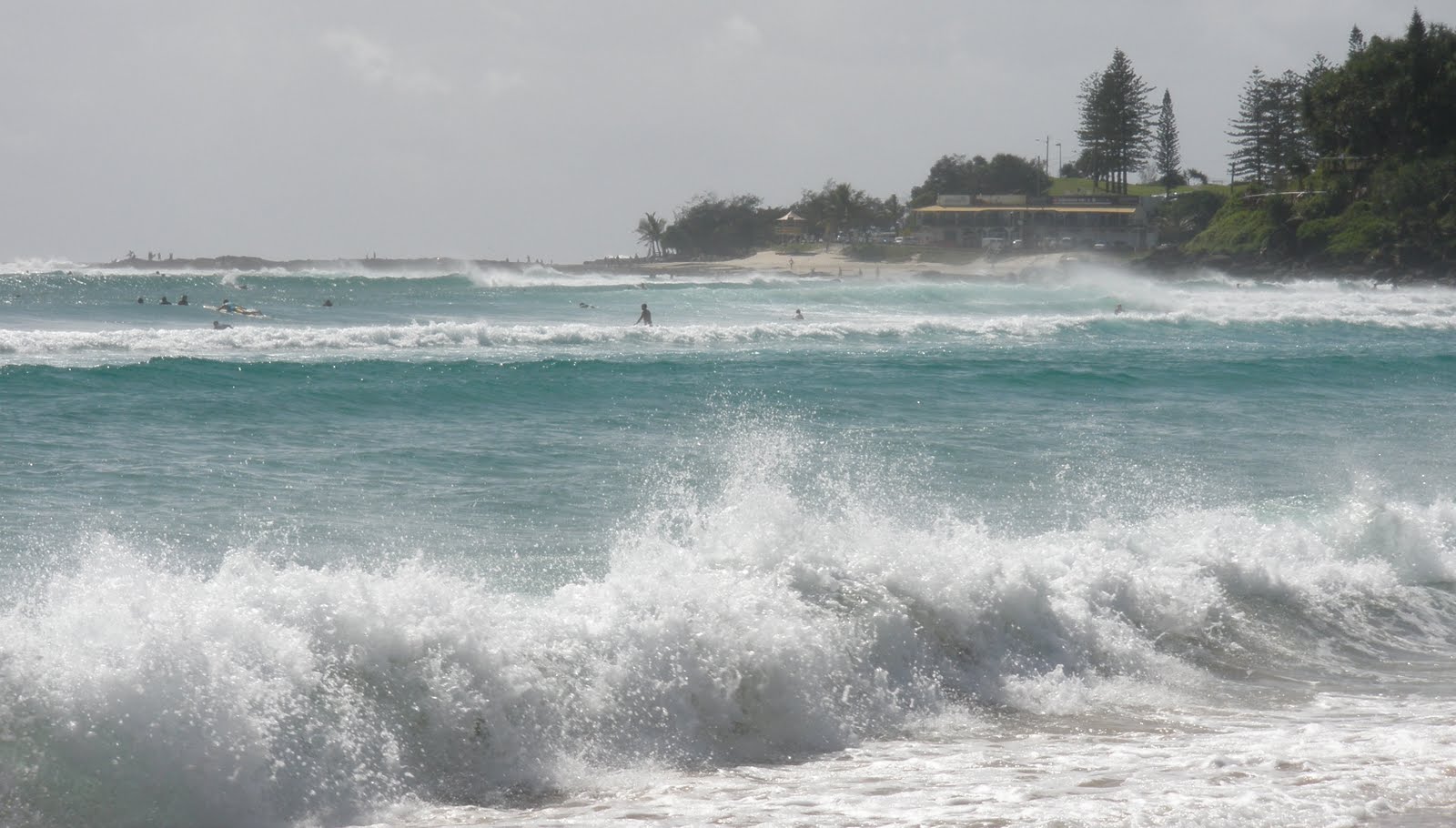
Tweed Heads. NSW.

Tuesday, 29 March 2011

Book Review: "An Extraordinary Year of Ordinary Days".

.
It was an absolute pleasure to read “An Extraordinary Year of Ordinary Days” by Susan Wittig Albert.

I felt like a trusted friend who had been invited to share this perceptive, beautifully expressed journal written during 2008 – the year Obama became president of the USA.

The journal is confronting due to the issues Albert is exploring, but unexpectedly it’s not depressing. She shares her growing awareness and concern about recession, climate change, environmental degradation, water misuse and energy depletion. But she also ponders her reactions to these issues, and contemplates how she will respond proactively. Albert is awesomely well read and includes her reading list at the end of each month for anyone wanting to further their own knowledge.

Included are quotes from her readings and press clippings about current political happenings, which gives a sense of immediacy of the unfolding political and environmental landscape. An added bonus is hearing about her life as an author, landowner and wife and the challenges she faces on those fronts as well.  Her writing is accessible and in no way intimidating, she comes across as a very aware woman who is sharing a challenging journey with us.

“An Extraordinary Year of Ordinary Days” is an excellent commentary on the current state of our world. I was so impressed, I’ve requested my local library to purchase a copy.


*I doubt that I've ever written a book review before, but I found this book to be outstanding, and wanted to share my enthusiasm. My book club mates know I'll be naturally attracted to books that are possibly 'meatier' than others enjoy, but having said that, if you are interested in what's happening with the environment, this is a good place to begin and/or extend your knowledge in a very accessible way.
.

Tuesday, 11 January 2011

An interview with a future Victorian Premier

What on earth would make someone run in a State election, especially when they know they don’t have a snowballs chance in hell of being successful?

But maybe, just maybe it’s important to have another look at the meaning of success.

I’m not a particularly political animal. As my mum would have said, “Politicians give me the pip”, meaning that they generally big note themselves, they make grand promises and don’t deliver, and all too often avoid the things I hold dear. Little things like honesty, integrity and valuing the resources that will enable us to survival on this planet we call home…stuff like that. Cynical? Possibly.

Recently, however, I had the opportunity to sit at the kitchen table and really talk with a young man about his motives for putting himself out there, and throwing his hat into the state political arena.

I’m not sure that Facebook is the standard method of declaring ones political intentions; perhaps it’s a Gen Y thing. Nonetheless, Facebook it was, and I was so impressed by his gutsy move that I was enticed out of my secluded “family and very close friends only” cave to 'friend' Matt Taylor: Independent candidate for Mornington (Victoria, Australia) in the 2010 State election.

It’s rarely easy to stand out from the crowd. But here was a young man, who my daughter had known at school, only just finished his University course, declaring that he was unhappy with what was being presented in the current political arena and he was prepared to make a stand.

I’m deeply impressed by Matt’s determination to ‘do something’. When others (including me) were saying:

“Politicians, you can’t trust them”

“Both major parties are pathetic”

“None of them are worth voting for”

“They’re equally as bad as each other”.

Matt was equally unimpressed with what was being offered at both Federal and State levels, and decided that he wanted to learn more and “give it a go”. He really felt the need to do something and be involved in some way that till then had been an unformed need. Matt’s experiences after this reminded me of the expression “bite off more than you can chew, then chew like crazy”.

He really didn’t have much to go on. He has no close family or friends involved in politics, so there was no one to show him the ropes and introduce him to the basic requirements let alone the complexities and demands of running your own campaign on a very small shoestring budget.

But the first hurdle was registering himself as a candidate. He took a day off work at his new job to register, nervously announcing his intention to the seasoned Electoral Manager in Dromana, a small beachside town on the Mornington Peninsula.

The way Matt described it, the manager (very politely and kindly) looked askance at him, enquiring if he really wanted to go through with it, and did he know what he was getting himself in to. The implication was clearly: the other blokes have been doing this for years, they know the ropes, they’re seasoned veterans, this is a safe *Blue Ribbon seat … “What on earth are you thinking!” (*Meaning that the Liberals have been comfortably ensconced here for many many years, and it would take more than a young buck like Matt to knock them off.)

One of the many things I was intrigued to hear was the amount of support Matt received from other very politically astute and experienced people. He explained that most people he met were encouraging and happy to share their wisdom. He described them as being friendly and supportive, and he enjoyed meeting new people and hearing their different viewpoints.

Matt described the experience as being a huge learning curve (really!). He knew he didn’t have a hope of winning, and he’s still keen to become more involved in politics in the future - possibly standing for local council. He feels he’s gained an enormous amount of confidence and has become more assertive. I observed drive and determination, and quite a matter of fact attitude of ‘there’s a problem, what can I do to fix it’ not in any way arrogant, but almost as questions: “How can I help?” “What can I do?”.

I know I’ve said it before, but I’ll say it again, young people often get bad press. We rarely get a balanced view or hear of the gutsy young people prepared to get off their butts and see what they can do. We’re leaving them a pretty shabby planet, and they have to pick up the pieces and it’ll take quite a bit of ingenuity to get it back to a good working order again.

Quiet, unassuming, and prepared to follow his heart and seek out new challenges to fulfil an inner need. Matt was rewarded with over 600 votes. For a beginner, learning from the ground up, with few mentors, I think the appropriate word to use is success.

.

Sunday, 21 November 2010

Some sensible career advice from an inspiring man.

To maintain my status as a member of the CDAA (Career Development Association of Australia), and like lots of other professions, I need to accrue the required number of Professional Development (PD) hours per year.

I like a good conference, and they’re generally an enjoyable way of adding PD hours. It’s always great to meet new people and catch up with colleagues from distant places. But sometimes I choose to go to a conference by myself to push myself outside my comfort zone, it's a good way to challenge myself to meet new people.

Apart from the general buzz of a conference, it’s also reassuring to confirm that my skills are up to date (always a plus) and have the opportunity to refine and fine-tune them. But the best part is being exposed to something completely new. (A BIG plus).

So, yesterday I tackled the freeways at an hour well before the pre-Christmas shopping hordes were awake, to accrue said PD hours.

Good oh, the first couple of sessions confirmed that I’m still on the right track, my skills are current, with a bit of fine-tuning possible. Yes, I’m satisfied: that’s as it should be.

But the last session – gosh! Riveting.

If you ever have the chance to listen to Andrew MacLeod go along. He forged a career path that initially appeared to be on a relatively ‘normal’ trajectory, but by giving things a go, and saying ‘yes’ to the challenges that came along, he has experienced a most amazing journey.

He’s an excellent presenter, and is passionate, knowledgeable and willing to speak his mind about politics, disaster relief and what makes a good career and the twists and turns his took! I've plucked some words from his bio: “recruited by the International Committee of the Red Cross to deal with military factions in Yugoslavia and Rwanda”, “Senior Adviser on Disaster Management”, “humanitarian teams”. "Bosnia, Kosovo, Serbia".

As they would have said in the old days: “I dips me lid to him.”

Andrew McaLeod's story (Wikipedia) brought home forcefully the amazingly unexpected opportunities that are sometimes available in apparently ordinary lives. It shows what can happen when we're open to chance and put aside the shoulds and oughts to do something that aligns with deeply held values: Humanitarian. Social conscience. The concept of a fair go.

Andrew encouraged those of us working with young people to remind them not to get hung up on the choices they have to make in middle secondary school, but to be as flexible as possible. It was wonderful to hear someone with clout say things I’ve been privately grumbling about for years.

Just when young people are discovering who they are and what makes them tick, and many are beginning to grapple with the BIG life questions - Who am I? Where am I going? Where do I fit in the scheme of things? What's really important to me? they have to make restrictive choices about subjects and courses, based on minimal life experience and not really knowing who they will become or what opportunities will arise. Many students don't have a clear idea of their strengths and skills.

Some students make subject and course choices for interesting reasons: Some are based on like or dislike of a particular teacher, friendship groups and occasionally subjects are made with closed eyes and wishful thinking. Not great or useful in the long run, and sometimes with sad results.

However, Andrew MacLeod had received some excellent career advice from his mother that was along the lines of:

"Create as many options as possible,
and choose the best you can at the time”


And by living by those words, his life has been anything but ordinary.

I normally don’t buy the videos from a conference, but I made an exception here. I want my family to see and hear an inspirational speaker.

Go and hear Andrew MacLeod if you can, and embrace the possibilities that can occur when you allow the unexpected and unplanned into your life!

.

Thursday, 10 June 2010

CDAA Workshop: 28. Ladies who Launch

(This post forms part of a series of powerpoint slides from a presentation I gave at the Career Development Association of Australia Conference 2010 entitled: The Roller-coaster Ride from Permanent Part-time Employee to Private Practitioner.)

After the disappointing experience with the business mentor, this book was a God-send. I came across it while rummaging around in the local library.

Written by women, for women - bliss! It tapped into so many experiences I'd had personally, so many of the setbacks and negativity surrounding a new project.

It also goes into how women think differently from men, and that the male business model isn't necessarily the best for us. So all that guff I'd been fed about the necessity of creating a sound business plan BEFORE I even began was enthusiastically thrown out the door with gusto.

I gave one of these books away at the end of my talk, and hope the recipient is as enthusiastic as me, and finding it encouraging for her new venture.

CDAA Workshop: 25. "The One Thing Holding You Back" Raphael Cushnir

(This post forms part of a series of powerpoint slides from a presentation I gave at the Career Development Association of Australia Conference 2010 entitled: The Roller-coaster Ride from Permanent Part-time Employee to Private Practitioner.)


I heard Raphael Cushnir interviewed on the radio one morning. He was inspirational. I think the title of the book says it all really.

I invited the workshop participants to reflect on what is holding them back from pursuing their dreams. It would have been good to have allowed more time for this, as it struck a cord with many people. Sharing could be empowering, and it's often reassuring to know you aren't alone when it comes to obstacles to change.

After some months I was able to borrow the book from the library - it was certainly in heavy demand, and lived up to my expectations. Cushnir uses skills related to Mindfullness Meditation and invites readers to work with the ideas to the best of their ability. It'd be worth buying to work through the exercises in an unhurried way.


.

Thursday, 29 April 2010

CDAA Workshop: 12. Values

Change for the sake of change can lead to deep disappointment if your underpinning values haven't been explored as fully as possible.

The desire to live by my personal values, beliefs and principles including the desire to have a smaller carbon footprint was integral to my decision to resign from permanent part time work.

In my first foray into solo work some years ago, my decision was based on the value of family time over employer, and in the importance of being at home when my children got home from school.

Participants were again asked to explore their core values, and jot them down.

CDAA Workshop: 9-10. Life's better with no boring bits!


(This post forms part of a series of powerpoint slides from a presentation I gave at the Career Development Association of Australia Conference 2010 entitled: The Roller-coaster Ride from Permanent Part-time Employee to Private Practitioner.)


What's important to me, where do I want to work, How do I want to work? 


 As Career Development Practitioners, we often ask clients these questions, but how often do we apply them to ourselves? How often do we sit quietly and think about our own future, satisfaction with work and life?


For participants of the workshop, the question was: Do you want to make changes in your career? 


What are the issues you face that need to be addressed? 


Is there something you can do today to begin the process of change?


.

CDAA Workshop: 5. Inspiration to change

(This post forms part of a series of powerpoint slides from a presentation I gave at the Career Development Association of Australia Conference 2010 entitled: The Roller-coaster Ride from Permanent Part-time Employee to Private Practitioner.)


The motivation to change career direction or work location can be influenced by many events. Such things as work-life balance are mentioned by many clients. However, when driving to work I was always inspired in particular by the tradies with their company name and phone number proudly emblazoned across their utes. I kept thinking that if they could work for themselves, why couldn't I?

What or who is your inspiration?

What can you learn from them?

What about them or their business can you emulate?


.