Thursday, 7 August 2014

Part G - Teaching in China - Games

One of the important goals of the summer school was to encourage the local teachers to become more confident listening to, understanding, and speaking English. Many of them hadn't spoken English (not counting giving minimal instructions to their students in English) since university - ie for five or more years! Just a tad rusty!

On the whole, their written skills were good, as was the ability to read and comprehend passages. But how to get people who know their pronunciation is more than likely to be incorrect, to take the plunge and chatter naturally? I don't speak another language. To put it mildly, I suck at remembering words and tones. I know how it feels to constantly get it wrong after the most patient person has corrected me for the umpteenth time. It doesn't feel good, and I accept that few of us will willingly look incompetent in front of our peers. So the challenge for the foreign teachers (ie us) is to gain the trust of the Chinese teachers, and encourage them to just give it a go! It's ok to make mistakes. That's how we learn. Heaps of encouragement, smiles, nods, support and gentle, accepting correction followed by more encouragement. By encouragement, I don't just mean from me, but from other students as well - they were great at this! Add some fun, competitions and laughter, and Bob's your uncle!
Team games were popular!
And so, games, games and more games. Preferably ones they can adapt for use in their own classrooms, but with up to 60 or sometimes more students per class, that's a big ask. The floors are tiled and the rooms extremely noisy with only 30 people, (although the Chinese teachers would usually use headsets and microphones to make themselves heard) and they're not spacious - just some of the challenges the Chinese teachers face. But some only teach one or two 45 - 60 minute classes a day - that'd be wonderful!

One of the challenges we faced is that some students don't turn up consistently. One morning, or afternoon, you'll do a double take when a fresh (and nervous) face appears. Sometimes it'll be another teacher, sometimes a random university student, sometimes the child of a teacher. It's quite variable. You'll have got to the "give it a go" stage with the bulk of the group but the newcomer needs one on one help to build trust in minimum time. Not ideal, but .....
Peeking at the card to read the word before putting it down!
Most popular in my room was Snap (are you playing poker over there ladies?) where new vocabulary words are written on (preferably blank) cards. Decks of cards were 1 or 2 Yuan at the local supermarket and the students wrote sets of three or four words in felt tip marker on the back and flipped them over in turn to find a match. (Please stop playing poker ladies!) They'd have to recognise and say the word quickly to win the cards. An adaptation would be to then put the word in a sentence. (Honestly ladies, how many times do I need to ask you to stop playing poker?) ... There are naughty students everywhere, even mature ones with a decided twinkle in their eyes!
Another good game was a dice and board game where each player has a token and moves it along the board. Each landing spot has a question they need to answer and everyone else in the group is expected to listen carefully and ask for clarification as needed. A variation of snakes and ladders would also work well and you could make the questions relevant to the needs of the class - workplace questions, how to introduce yourself at a business meeting or conference, geography, history etc.
A hive of activity and the hubbub of enthusiastic conversation = success! Most students were so involved they didn't notice assorted photographers strolling in and out of the classrooms. I suspect some of the administration staff would have quite enjoyed being involved in the games as well, even if it did mean speaking English!

My previous posts about Teaching in China were our ArrivalBanquets,  Culture and comfort foods, DrivingExercise and Fabulous Food. The next one will be about History!
.

Wednesday, 6 August 2014

Part F -Teaching in China - Fabulous Food

You don't know what you've got till it's gone.

Now there's an apt line from a song. I hadn't realised how much I'd miss cheese until there wasn't any around! Or cold beer, or any one of a number of items. 
Pretending that the egg is on a piece of crunchy toast.
Add purple potato, melon and a spinach dumpling & it's kind of like Eggs Benedict!
Oh, ok, it's not really, but a person can pretend can't they!
But it got me thinking some sobering thoughts: I can't imagine what it'd be like to have to flee your country of origin and leave behind everything you've ever known, all that's familiar and comforting, to make a life in a new and strange land ... especially one that's hostile to your role as an asylum seeker and vilifies you constantly. I missed some foods for a few short weeks ... that's nothing in the scheme of things.
...
The food was amazing. Our hosts were keen for us to try dumplings (above) and then Peking Duck, (below) but the day they'd planned happened to be an auspicious one for weddings, and everywhere was booked out, so we had to wait. 
Wedding - with a band and fire crackers!
The wait was worthwhile!
The resounding cry was - "The duck did not die in vain!"
Above L-R. ducks being barbecued, Lacey and Candy enjoying slivers of perfectly cooked and presented duck. Bottom - the chef cutting wafer thin slices from the bird.
Below was a lovely, light, delicate dough, shaped a bit like an oyster shell, toasted on the outside and soft inside. The intended filling was laced with chilli which made my eyes water freely as it wafted past on the lazy-susan, so this Aussie made it into a burger-like item with deliciously spiced egg and beans. When you're missing home food - improvise!

I was even given a cooking lesson in the restaurant kitchen. Lack of a common language wasn't a major issue and I've got an idea how to make another delicious dish with flat bread and greens. The skillet could be a bit of a problem though ...
You want a change? How about Korean Hot Pot! Emphasis on hot, so the foreigners (without the cast iron stomachs) were given the tasty, and more or less chilli free broth. 


A wibbly strand of tofu being unwound and
lowered into the boiling liquid. Delicious!
Our school hosts had arranged for our lunches to be eaten at a lovely local restaurant. Every lunch was a generous banquet! We found the massive daily amounts of food wastage a real challenge, and kept asking for fewer dishes to be presented for us. None of us are big eaters at home and simple lunches are the go when teaching. While we managed to eat large quantities at first, we all ate less and less as the time went on, as fronting up to classes requiring a lot of energy, with an uncomfortably fully stomach, added an extra layer of difficulty. It seemed rude, but we were there to teach, not eat!
The restaurant was in a large undercover area, complete
with fish in the moat around the eating area, and budgies
and other birds singing in cages hanging from the rafters!

Fruit signals the end of the meal.
Until the last few days, all our polite requests for "less" fell on deaf ears. But after two weeks working closely together, our genuine need for more simple foods was accepted - I hope without us appearing to be overly crass or rude, and that we haven't wrecked international relations between our countries forever!

Doggie bags are becoming more popular and common, but in the 30C+ heat, it’d be unsafe to take food home unless it was able to be refrigerated on the journey.

I'll continue with the food theme when I get to I - Illness and U - Unfortunate events ... what would a trip be without them?

My previous posts about Teaching in China were our ArrivalBanquets,  Culture and comfort foods, Driving and Exercise. The next one will be on Games!


.

Tuesday, 5 August 2014

Part E. Exercise. Teaching in China

It's worth going for a walk in the mornings in China to see the hive of activity in the purpose built exercise areas, complete with colourful equipment, as well as on footpaths and in parks.
You'll see people striding purposefully around clapping, beating their chests, swinging their arms,  right arm over left shoulder – left over right – whack, whack, whack, circuit after circuit, in parks, by walls overlooking a river, under trees, by roadways. There are groups ballroom dancing, exercising with swords or fans, doing tai-chi or press-ups. 

One morning I was watching a woman waiting for her dog who was enjoying an interesting smell. Rather than just stand idly by, she leaped up and grabbed an overhanging branch and started swinging. Not something you see in downtown Melbourne! Maybe I could start a trend?

Exercise is part and parcel of the way of life, and I often felt that I'd like to join in, especially when we came across thousands of people power-walking around Yunlong Lake (aka Dragon and Clouds lake) in Xuzhou.
The pillars and glass walls create a walkway within the lake.
It was an unforgettable experience, completely unexpected and mesmerising. Our hosts had taken us for a drive to see the lake at sunset and to walk into the glass lined observation area within the lake. It had been a charming and peaceful stroll perfectly suited to the humid summer evening. There'd been giggles, dagging around, lots of photos and general lighthearted banter.
Come on in, the water's fine!
We're IN the lake!
Coming back to the car however, we were met by battalions of briskly marching people, rank upon rank of them. Some squads carried large red flags with lettering on them, some people were scurrying to keep up with the leader, some groups were disorganised but clearly enjoying themselves. But the most arresting were the large formal groups in uniform, four or five abreast, brisk, businesslike, arms swinging in time to the blaring music, seemingly emanating from the leader's waistline. The orange shirts. How I wanted to join in with a group! This wasn't just marching music, it was MARCHING MUSIC for the serious power-walker, designed to get the feet of the most reluctant body striding along!

We told some of the Canadian teachers about it at breakfast next morning and it turned out that one of their students was a member of one of the groups complete with flag, logo and uniform, and they were invited to participate the next evening! Apparently this happens every evening of the year, and around 10,000 people (yes, that's really Ten Thousand!), stride, march or walk around the approx 7km circuit every night! That's awesome!

The photos here are better than mine, and contrary to what it says, the people we saw weren't just elderly women. There were children, men, young people, families and fit older folk as well!

Some of our teaching colleagues incorporate a demanding exercise regime into their daily lives at home. However due to work/social commitments and the hours we spent adapting lessons to meet the needs of our teacher-students, along with the sticky humidity, there was little time for doing much more than meandering down to the shops in the relative cool of the evening. 

I think I'll rename myself Sloth Sue.

My previous posts about Teaching in China were our ArrivalBanquets,  Culture and comfort foods and Driving. The next one will revisit Food!


More about the region:


.

Monday, 4 August 2014

Part D: Teaching in China - Driving in China? No way!

No way? For starters they drive on the wrong side of the road! 

... And why bother even thinking about it when in the large cities, taxis are inexpensive, the drivers use a meter and don't have a habit of ripping off the tourist. 
Driving and parking on the footpath.
Taxis are easy to hail; just step onto the road, extend your arm and waggle your fingers. If they have a green light on the roof they're available. Of course, you'll have thought ahead and will either have a map with the location you want to get to circled, or have asked someone to write the address down in Chinese. Your hotel business card will be tucked safely into your pocket so the return driver knows where to take you! Occasionally they'll refuse to take you to the address - perhaps it's too far, or they don't know the area - don't worry, there'll be another along soon who's happy for the fare.

I've been a passenger a number of times in private cars, tour cars and taxis, in different cities in China, and have observed some very big differences between driver habits in Australia and there. 

At first the traffic seems chaotic, with people driving on the wrong side of the road, riding e-bikes on the footpath, parking on the footpath, casually crossing double lines and tooting repeatedly. 
Learning to drive on the footpath at an early age! I asked permission to photograph this child, and dad, with the remote control firmly in hand was happy to oblige.
But when observed over a few days it settles into a pattern. On the whole, tooting is not aggressive, it's to alert another driver that you're there or overtaking. Drivers are occasionally pushy, particularly in the larger cities, but rarely show the overt, nasty and aggressive overtone, complete with foul abuse and rude hand gestures that is prevalent in Australia.
Remind me again.
Which lane goes in which direction?
The word “accepting” came to mind. As if drivers understand and accept that a taxi will stop at the curb waiting for passengers to fill the seats with parcels, and people need to get settled before setting off. Drivers give way. Driving with alcohol in your system is illegal so our drivers didn't drink at all. They don’t (on the whole) push in, determined to be first, to show who’s more powerful or more of a bully. They generally don't speed. Of course there are exceptions to all observations, but it's common to see and experience foul rudeness and dangerous driving within minutes of getting into a car in Australia (at least in Melbourne it is).
Well organised chaos.
It takes a while to get used to e-bikes being ridden, and to cars being parked on footpaths. E-bikes in particular are a challenge because they're silent and you don't know they're coming. In Xuzhou, it was common to see people wandering along the centre of the road texting, gazing into the air and completely ignoring the tonnes of metal whizzing past, with complete indifference. It works. I don't know how, but it does. Don't try this at home people! 
Learning to stroll in to the middle of the road with the locals. 
It's best to just shrug your shoulders and embrace the difference with a smile and (attempt) to act like a local. 
Great little 3 wheeled taxis. Apparently driven by disabled people.
It's no wonder that Chinese drivers get a bad reputation when they presume that similar courtesies are practised in Australia! It's not that they're necessarily poor drivers, I suspect it's that we're far ruder and less tolerant on the roads.
Hire bikes are common, and seemingly everywhere.

E-bikes and clothing sheltering from the rain.
Tianzifang. Shanghai.


The adoption of electric bicycles, scooters and larger bikes over the years has made a massive difference to the levels of pollution. It's now possible to walk along many major streets without gagging in the fumes. Of course there's still a long way to go, but they've made huge inroads. C'mon Australia we're being left behind!

My previous posts about Teaching in China were our Arrival, Banquets,  Culture and comfort foods . The next one will be about Exercise.

.


Sunday, 3 August 2014

Part C - Culture and comfort food while teaching in China.

For people coming from mono-cultures, the experience of being the only foreigner, the odd one out, can be unsettling, and travelling with a little bit of home can make the difference between feeling completely at sea, or grounded. Coming from Melbourne, Australia, I’m used to being surrounded by different cultures, foods, languages and ideas. I’ve worked in a variety of settings with people from a huge number of countries over the years. But I’ve rarely worked with one single group of “foreigners” it’s mostly been mixed groups, so for me to work with only Chinese people was unusual. They were all able to speak with each other, and many had well formed work and friendship groups, whereas in a class with multiple nationalities, English is often the only common language. 

Travel to China can be exhilarating, the country is steeped in a rich history going back many centuries, but it’s also draining, can be confronting, and the smells, noise, heat and humidity, traffic and sense of being “full on” can be utterly exhausting. People who’ve never experienced an Asian country can be overwhelmed and usually find they need to escape, not only to the secure cave of the hotel room, but also with comfort foods. Most of us tend to work better when we’re in control, and as teachers being in control is integral to the job!

The music in the shops is different, the voices are different, the oily food is likely to upset your digestive system. Even familiar outlets have a distinctly local flavour. At first, the traffic seems erratic and unpredictable. If you’re thinking of working overseas, even for a short time, think carefully about what you like to have to soothe you when times get tough. Is it a special breakfast cereal to start the day on a good note? Muesli? Oatmeal? Is it perfume? A particular bar of soap to soothe the senses? Your own music carefully selected and securely loaded onto your favourite device? (Don't forget the correct cables and adaptors!) Paper, or ebooks?

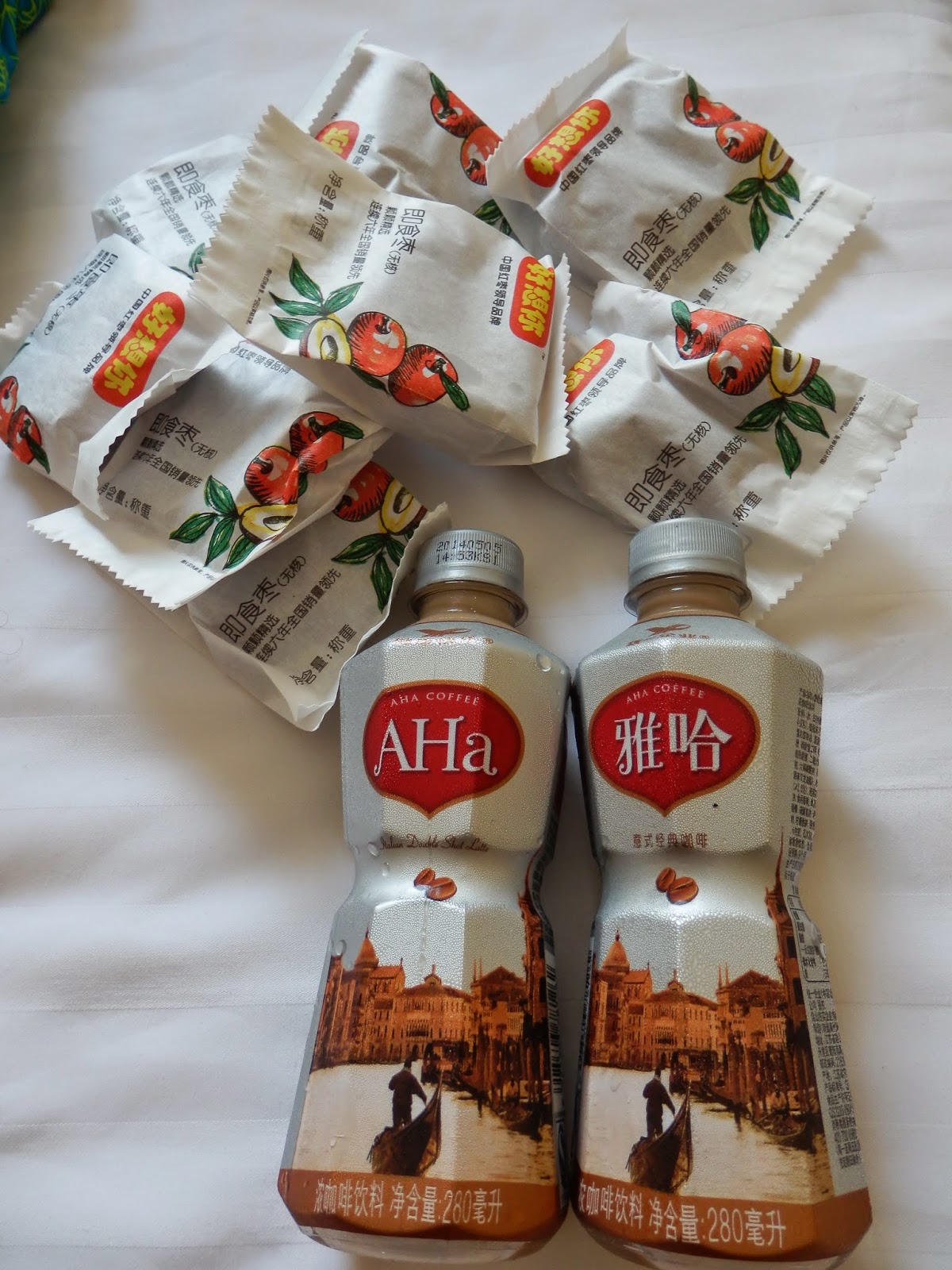
For me it’s tea. Preferably Earl Grey with a dash of milk. I also enjoy English tea, but unfortunately hot tea with milk isn’t readily available in all countries. Usually it’s possible to buy long life milk as refrigeration isn’t always possible. Next time (and I hope there will be a next time!) I’ll pack some of those tiny motel style pods of long life milk just to be sure! I’d counted my tea bags carefully before I left home, but hadn’t allowed for extra reviving cups of tea after work. Thankfully I was able to replenish my stash of Earl Grey tea in Shanghai – hooray!
A passable drink of coffee was welcome mid morning. It's worth finding a local brand rather than imported items where possible. The long-life bottles weren't bad at all. The juju berries were a delicious gift.

Packing comfort items might seem silly to some, but it can make the difference between feeling out of sorts and tense, or relatively relaxed. 

Relaxed is my preferred option!


My previous posts about Teaching in China were our Arrival, Banquets and this one is followed by Driving.


.


Saturday, 2 August 2014

Part B. Teaching in China - Banquets, banquets and more banquets!

Putting on weight wasn’t on my Chinese agenda, but the constant banquets combined with my desire to sample new dishes and genuine enjoyment of (some of) the wide variety of foods made it a lost challenge!

If you've never attended a formal Chinese banquet it's confusing, and the order of the dishes seems completely back to front with sweet dishes appearing alongside savoury ones. But as we had been politely reminded by the Director of the Jiangsu Board of Education (?) "When in Rome .... !"

I'd had some experience sharing meals with Chinese people over the years, but we've been long term friends, and I foolishly hadn't thought to do much research on the different expectations at a formal meal before leaving home. 
The same as a formal western meal can be over the top with a bewildering array of cutlery, glasses and unstated do's and don'ts, there are equally as important rules of etiquette to be observed at a Chinese banquet. Careful observation of the more influential people is vital when you haven't done your homework! 

I was aware of general muttering before we were seated and finally realised our relative ages and statuses was being discussed. Beards clearly have high status!
Decorative cake sprinkles and sugar
on top of the corn dish.
Different, but good!

To say a banquet is awkward when there's only one translator, few of the Chinese are comfortable speaking English, and none of the four teachers had any Chinese language skills and had only just met each other is a complete understatement! 

The teachers from the US were swimming in a fog of jet-lag, and didn't want any alcohol at all. We'd been squashed into a car together for 5 hours and were travel weary. None of us was remotely hungry, and we all wanted to get settled into the hotel and sort out the teaching materials for the following day. Not a great way to make a first impression! However we did our best to represent the USA and Australia in a positive way, and nibbled at the vast array of dishes, drank water and tea, (although some of us decided a decent dose of alcohol was in order!) and smiled and nodded as seemed appropriate. 

Our colleagues from the US tried to, and succeeded in refusing alcohol. Oh deary me. There's some etiquette to be learned there! Toasting is a fine art and if it's possible to get a Z, I got it. For the bookend banquet on the final night, I'd wised up and sorted out a lovely "minder" to sit next to me and she happily gave some quick lessons via our translator as needed! Up here for thinking 99!


I've included some links at the end to what appear to be accurate primers for the newbie. Do be wary of the info about reversing your chopsticks though, as the Chinese we mentioned that to had never heard of it and thought it was extremely odd. 

I know I’m a wuss, but I’ll pass on the chicken feet, cock's comb, jellyfish and pigs tendons and ears. No matter how nutritious they may be and how wise and respectful it is to use the whole animal there are some bits that I don’t find remotely desirable. As for the fish head, hmm, I don't need to think about that either. Nope. Said in the politest, most smiling way possible, while patting my genuinely bulging stomach ... much too full. No really, I couldn't possibly!! 

Seriously though, how does one express to the hosts that two banquets in one day is one too many? The massive amount of food consumed at Saturday lunchtime in Nanjing, meant that to face another, over-the-top banquet the same evening, was more a chore than a pleasure, especially for those still in the throes of massive jet-lag, who simply needed the chance to sleep without painful digestive overload.

At the evening banquet, one of the foreign teachers took photos of each dish as it appeared and got to 29 before the end! That’s a massive amount of food, and there wasn’t the remotest chance that it could all be eaten – especially by people who had barely digested the lunch banquet!  

I understand that excess at banquets and when entertaining is part of the Chinese culture, but wanton waste isn't in harmony with the expressed awareness about the stress on global resources, and the need for all of us to use these wisely.

Thankfully, the new Communist party leader Xi Jinping is aware of the issue, and is promoting an “empty plate” policy. I suspect this is going to be a bit of an uphill battle, but hopefully the incredible wastage can be addressed.
On a tour of China's Hebei province in December, Mr Xi ate a simple meal featuring four dishes and one bowl of soup; a paltry number of courses by Chinese government standards. China's blogosphere took note; Operation Empty Plate's followers began to climb. http://www.bbc.com/news/world-asia-china-21711928
My advice for managing graciously at a banquet when you don't know your way around: Find an ally and manipulate it so you sit together. It doesn't matter if you don't speak the same language, body language can be remarkable efficient!

A fruit platter often identifies the end of the meal 


Other posts about Teaching in China are our ArrivalBanquets,  Culture and Comfort foods, DrivingExerciseFabulous Food,GamesHistoryIllnessFrom Jerilderie to JiangsuKenny (which is about toiletsLists and Communication Misunderstandings. to be followed by - Observing the open eyes!

Chinese banquet etiquette: 

http://www.goodfood.com.au/good-food/eat-out/honour-respect-and-table-manners-20130205-2dv04.html

http://blogs.wsj.com/scene/2013/06/28/drinking-at-chinese-business-banquets-a-primer/


https://www.albertacanada.com/shanghai/images/ChineseTableManners.pdf


.

Friday, 1 August 2014

Part A. Teaching in China. Arrival: Off to teach summer school in Jiangsu Province.

I've just returned from teaching teachers during July summer vacation in China with JESIE - the Jiangsu Teachers' Training Summer Program.

The Jiangsu Teacher's Training Project started in 2003 and is sponsored by the Jiangsu Provincial Department of Education and supported by the Municipal Education Bureaus of Jiangsu Province. The goal is to provide opportunities for Chinese teachers in primary and secondary education to improve both their listening and spoken English language teaching skills and strategies. So far, over 171,000 local teachers have been involved! Many of them have been taught English by Chinese teachers and may have never had the opportunity to interact verbally with a native English speaker. Some won’t have had conversations in English for 5 or more years since they graduated, and know that their pronunciation is likely to be poor. Even though they are teaching English, most of it is written, and their skills in that area are good. Understandably however, many lack confidence in speaking with us because they've had so little exposure to natural conversations. 

Teaching in China is something I'd thought of doing many years ago, but the timing was always wrong and so I hadn't researched any further. However this year everything lined up and I applied, was interviewed and accepted! 

I promptly went into a flurry of activity to prepare teaching materials, visa, insurance, prescription medications that I might need, and assorted official paperwork. I also wanted to arrive in Shanghai a few days ahead and explore the French Concession area and arrange to enjoy a short holiday afterwards in CambodiaEven though I'm one of those people who allows generous amounts of time to complete tasks, the time demon seemed to be at work removing hours from the day! Hotel and flight bookings are stressful at the best of times, then there are bills to be put on an auto payment cycle, mail to be held and working out appropriate work-style clothing and shoes to squeeze into a small travel bag. Check and double check that flights line up, and hotels coincide with flights - it's a massive relief when it works out!

We met up with the Canadian and US teachers at a hotel near the Bund on a humid Shanghai morning. It was hectic! There seemed to be hundreds of foreign teachers, with those from the US sporting bright red caps and tee shirts. Watching the massive mounds of luggage being wedged, tetris-like in the bowels of the bus was entertaining, but try as they might, the staff couldn’t work magic, and eventually many large, heavy and awkward suitcases, backpacks, general paraphernalia and teaching materials  were balanced on the back seats of the bus for the long drive to Nanjing.

From that moment, all essential on-ground expenses were covered. Anyone who regularly cooks, knows that to have a break from planning, shopping and preparing meals is welcome! No cooking for 2 weeks! None at all! Along with accommodation, breakfast, lunch and dinner are all supplied. 


In Nanjing we were welcomed with a kit of teaching ideas and a gift of beautiful brocade; there were formal greetings, a tour and general orientation. It was here that the size of the group was evident. One hundred and twenty three teachers came from NZ, the UK, the US, Canada and Australia. There are more teachers involved from the northern hemisphere because it's their summer vacation. In Australia, it's mid winter, mid term. 

I was perplexed to be constantly asked if I was "with" the Americans or Canadians. Some teachers really struggled to comprehend that to be involved in the programme, you don't need to be from the US or Canada. Lots of other countries have native English speakers too! 

On Saturday in the heat and torrential rain (more suited for paddling than touristing) we sloshed and slipped through a small selection of interesting historic sites in Nanjing. Note that the Chinese do great cheerful umbrellas - there's no anxiety about colour or frills for either men or women. Not only does it make wet weather photos look better, but is so much more lively looking than dreary, boring corporate black.  Take note Melbournites - we need to lift our game! Bring on some brolly colour!!

I would love to have had more time to explore Nanjing at leisure ...


Then on Sunday, four teachers allocated to our school met with our host school interpreter and official representatives, said goodbye to our colleagues, and almost squeezed the luggage into the car ready for the five hour drive to our hotel in Xuzhou.


Almost? Some of the luggage wouldn’t fit so was relegated into a minivan also heading to the city of Xuzhou where we’d be located for the next two weeks. Travelling light isn’t necessarily high on the agenda for some well prepared teachers!

Life is never boring!

The next post related to teaching in China is about Banquets, followed by Culture and Comfort foods, then DrivingExerciseFabulous FoodHistoryIllnessFrom Jerilderie to JiangsuKenny (which is about toilets!) Lists, Misunderstandings and Non-verbal communication
.